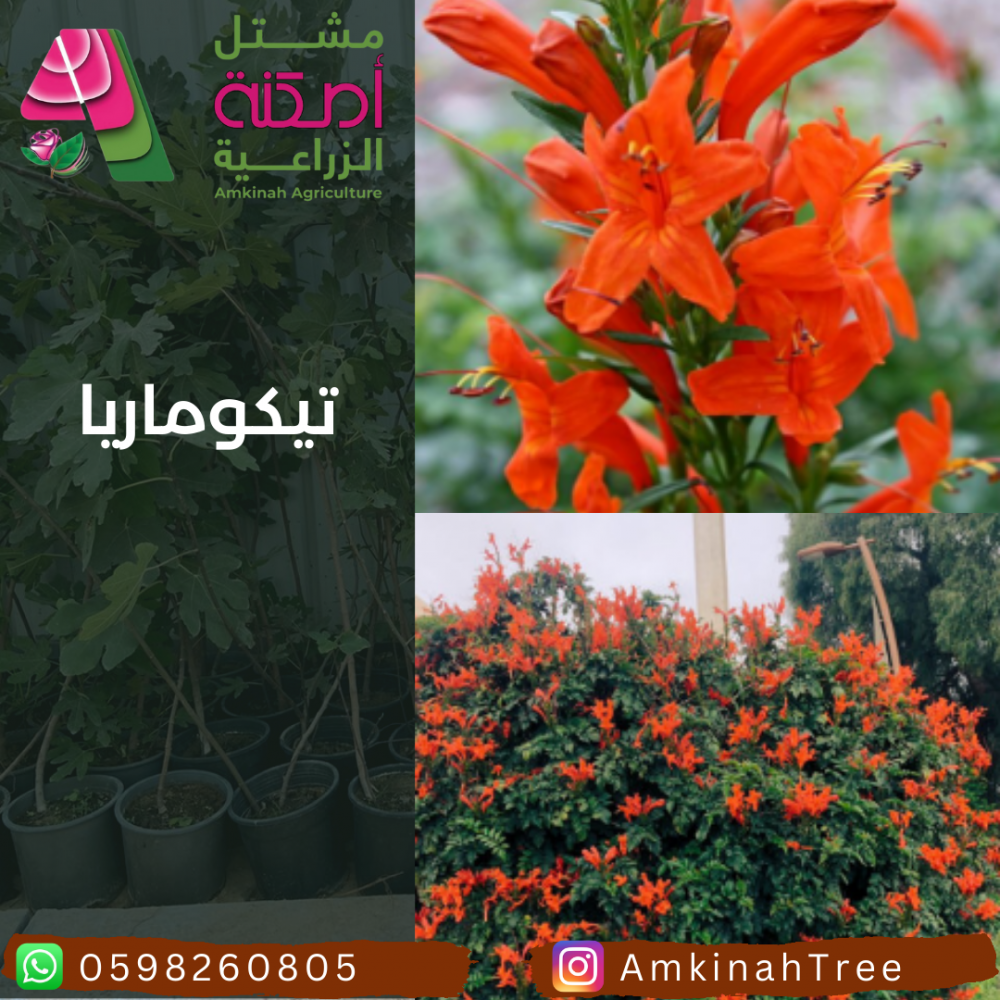
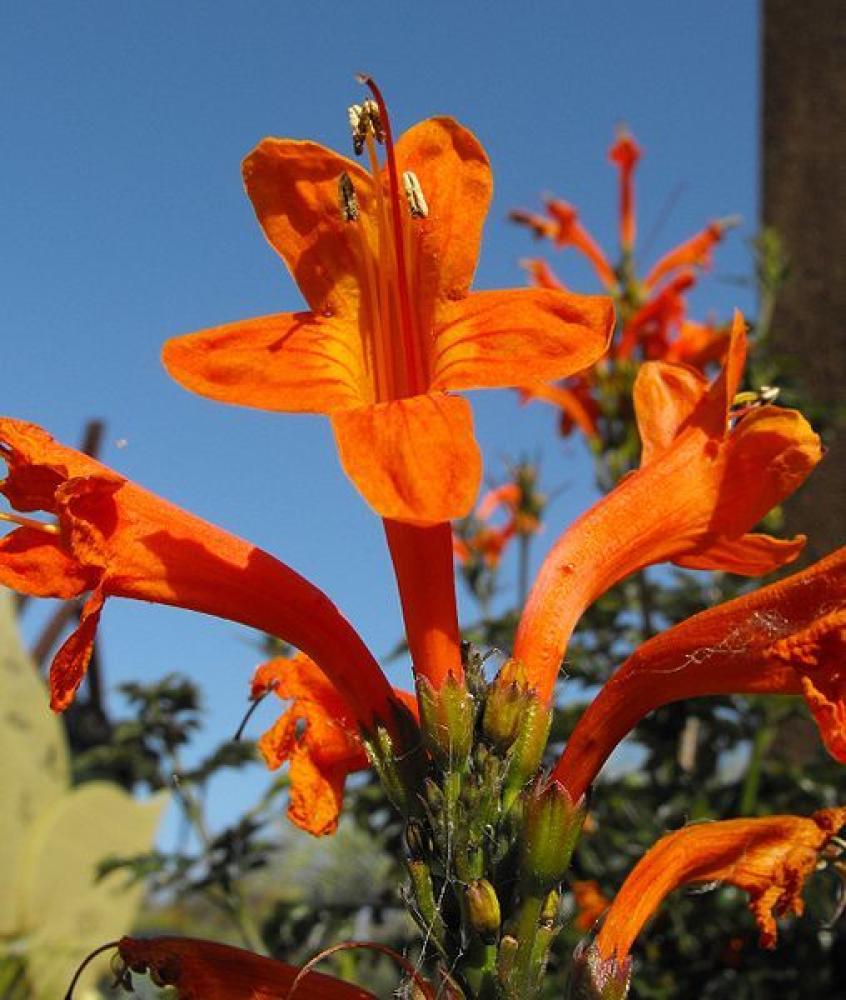
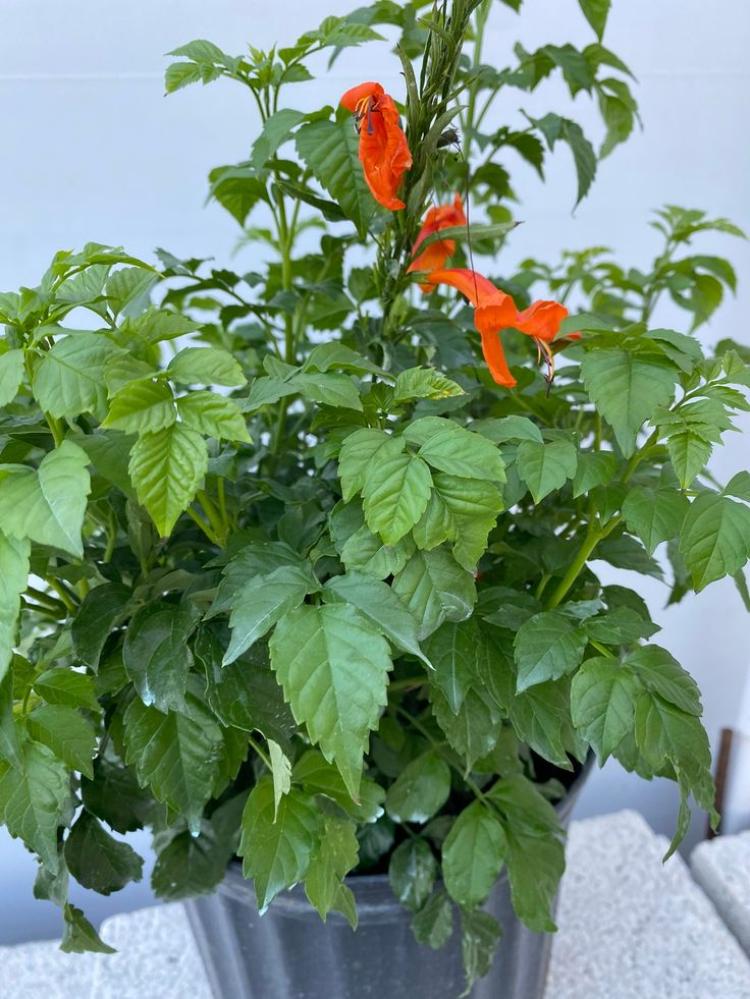
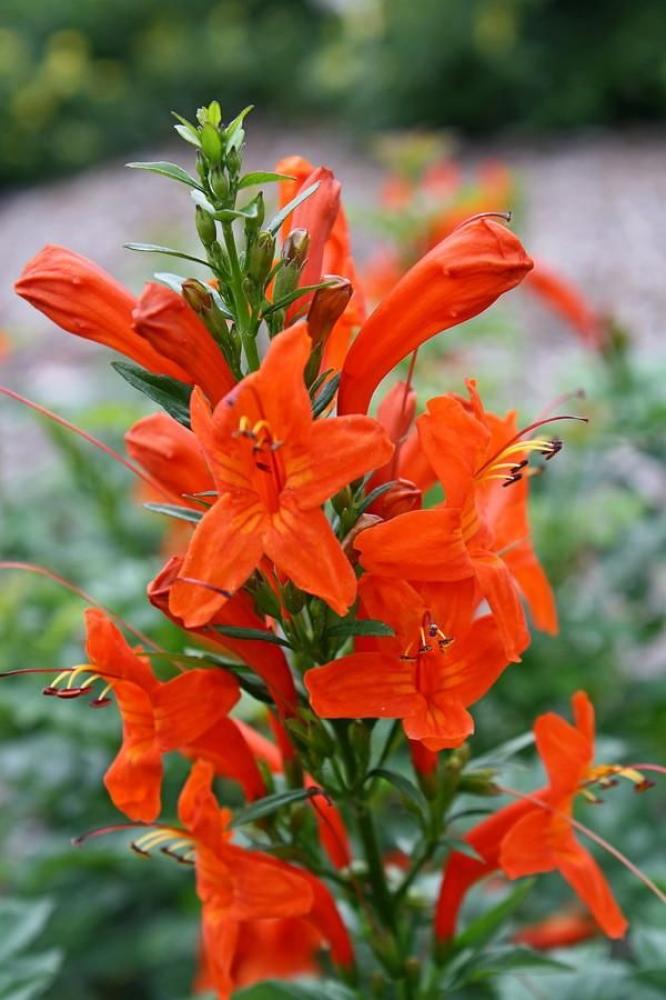
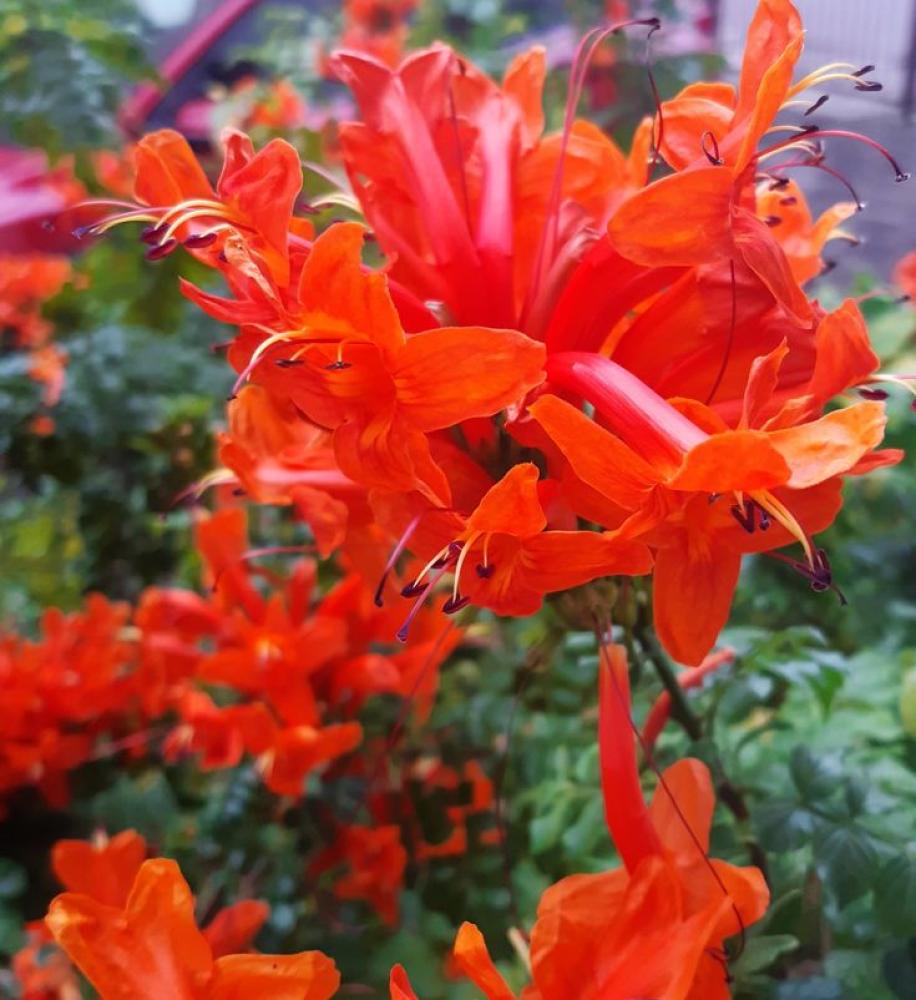
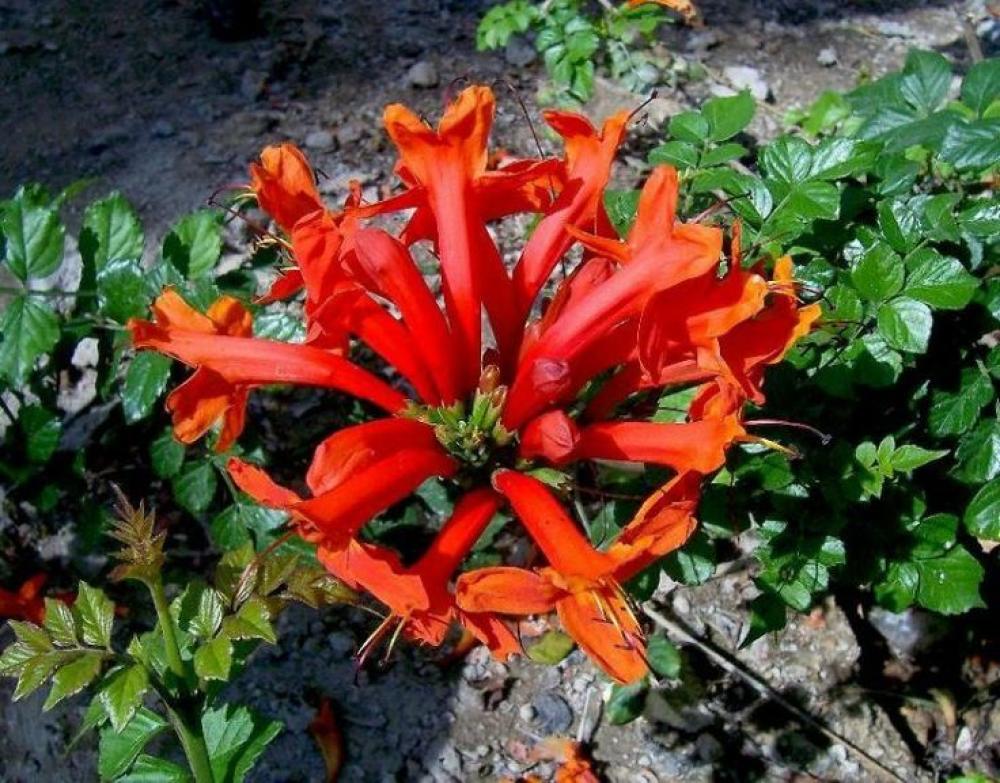
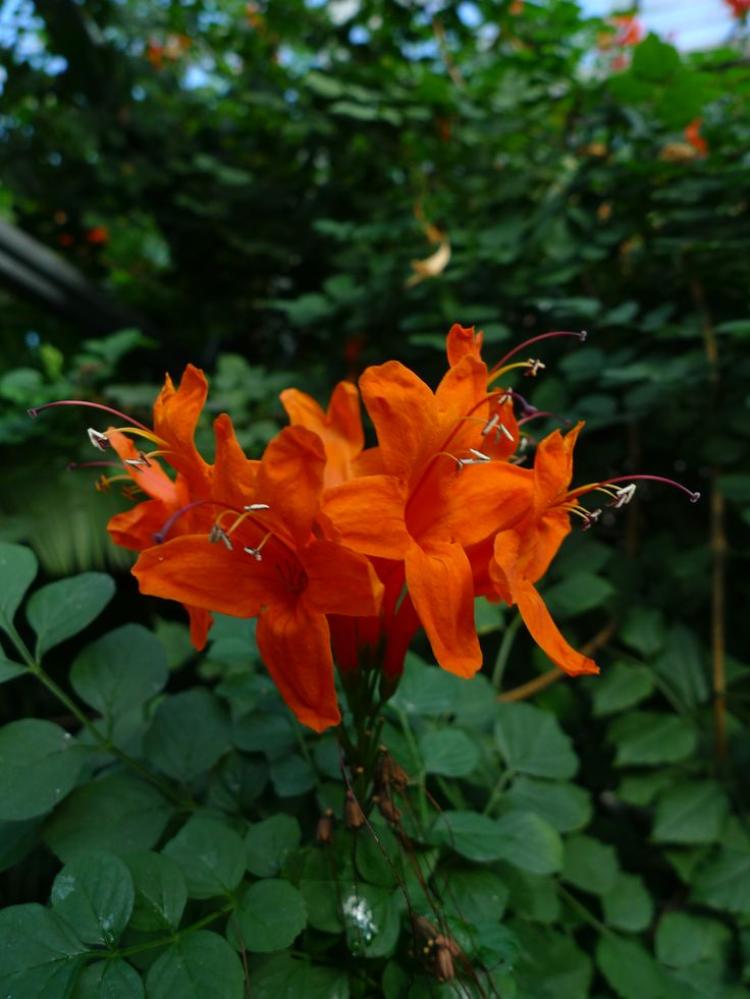
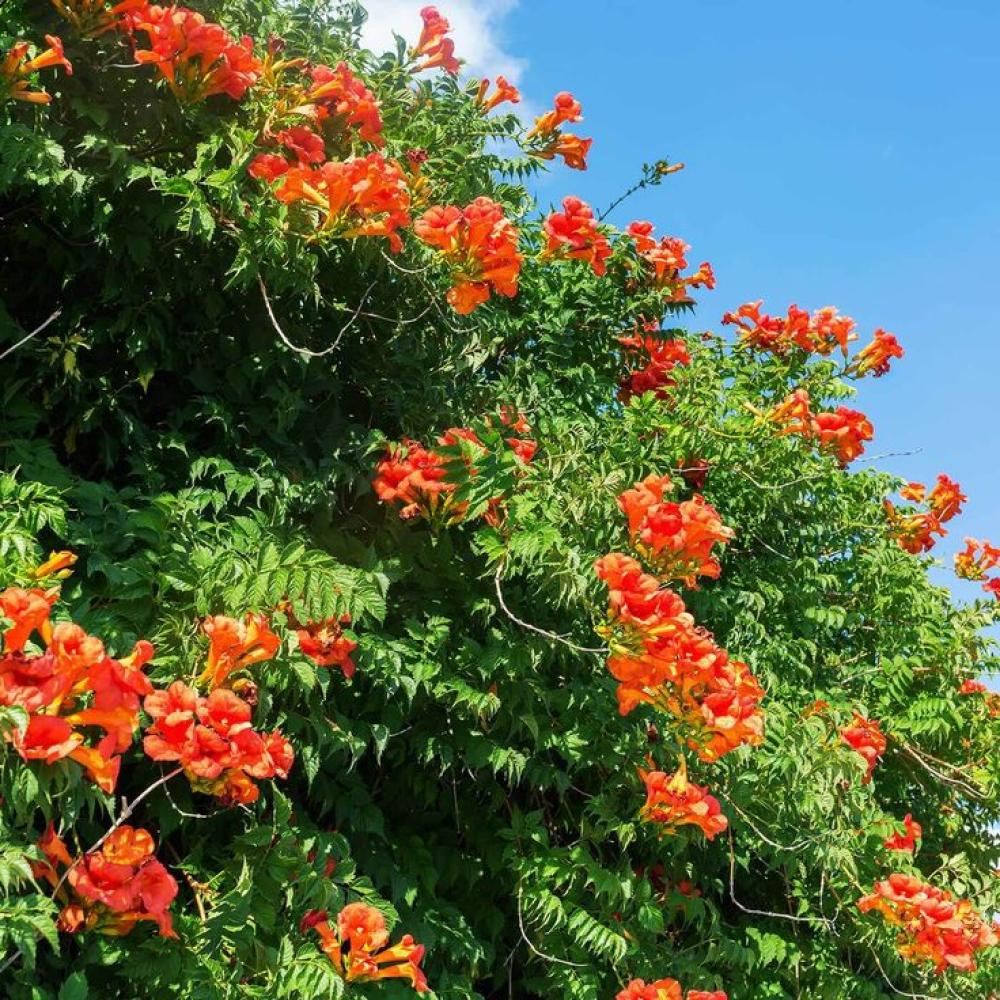
Tecomaria Capensis belongs to the Bignoniaceae family, and its original habitat is South Africa. It is a plant whose flowers attract bees. Although it is a climbing plant with multiple stems, with good pruning it can become a single thick stem plant. It blooms in spring and the beginning of summer, and some specialists mention that it blooms in autumn and summer. The apparent reason for the difference is the variation in climatic regions, as the flowering process in plants is mainly affected by the length of day or night, as well as other factors such as temperature, watering schedules and amounts, and the type and quality of fertilizer. Its flowers are red, yellow, and orange. It is a fast-growing plant that succeeds in our hot, dry climates. It is watered moderately and abundantly in summer. It is preferred to prune it at the beginning of spring to increase branching and flower density. It is fertilized two to three times a year with organic fertilizer. It is recommended not to plant it in places exposed to strong air currents, and it is better to plant it in gardens where it can receive shade from large trees during the hot summer noon.
Read more
Purchased
18 times
Description
Tecomaria Capensis belongs to the Bignoniaceae family, and its original habitat is South Africa. It is a plant whose flowers attract bees. Although it is a climbing plant with multiple stems, with good pruning it can become a single thick stem plant. It blooms in spring and the beginning of summer, and some specialists mention that it blooms in autumn and summer. The apparent reason for the difference is the variation in climatic regions, as the flowering process in plants is mainly affected by the length of day or night, as well as other factors such as temperature, watering schedules and amounts, and the type and quality of fertilizer. Its flowers are red, yellow, and orange. It is a fast-growing plant that succeeds in our hot, dry climates. It is watered moderately and abundantly in summer. It is preferred to prune it at the beginning of spring to increase branching and flower density. It is fertilized two to three times a year with organic fertilizer. It is recommended not to plant it in places exposed to strong air currents, and it is better to plant it in gardens where it can receive shade from large trees during the hot summer noon.
Read more