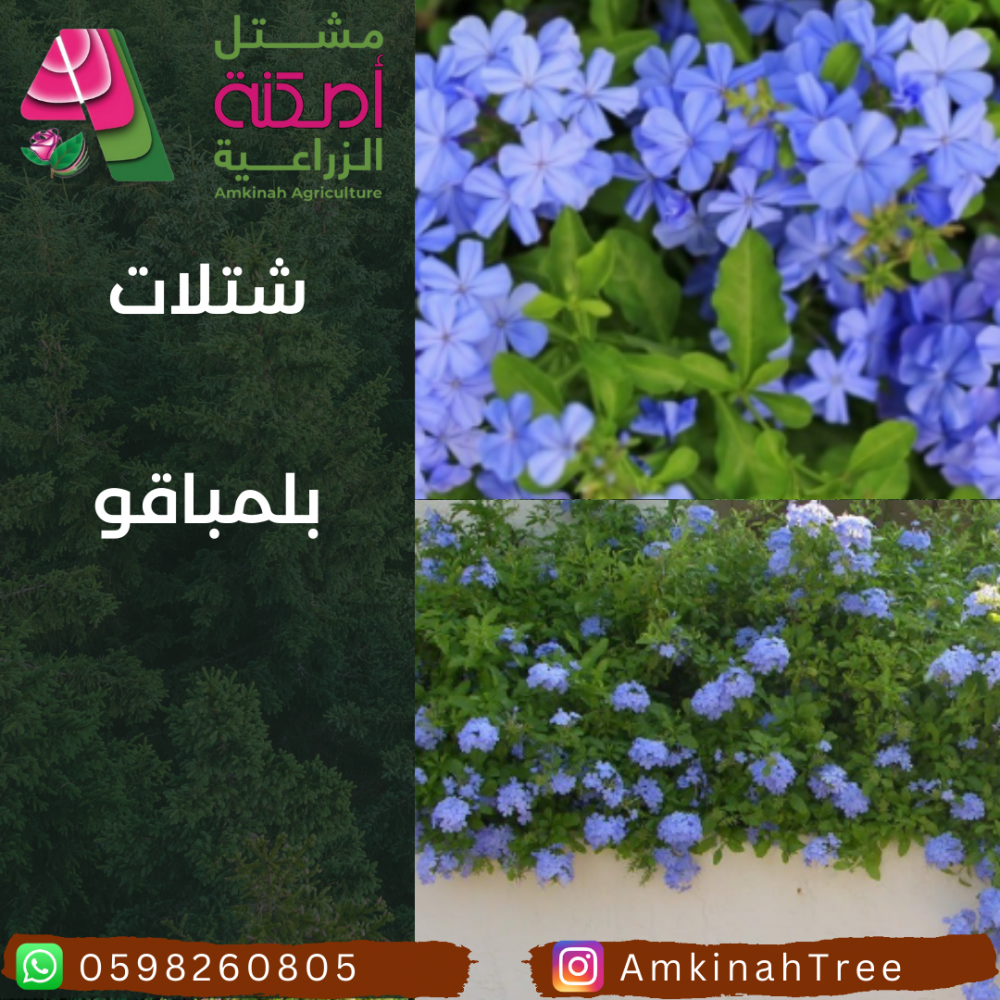
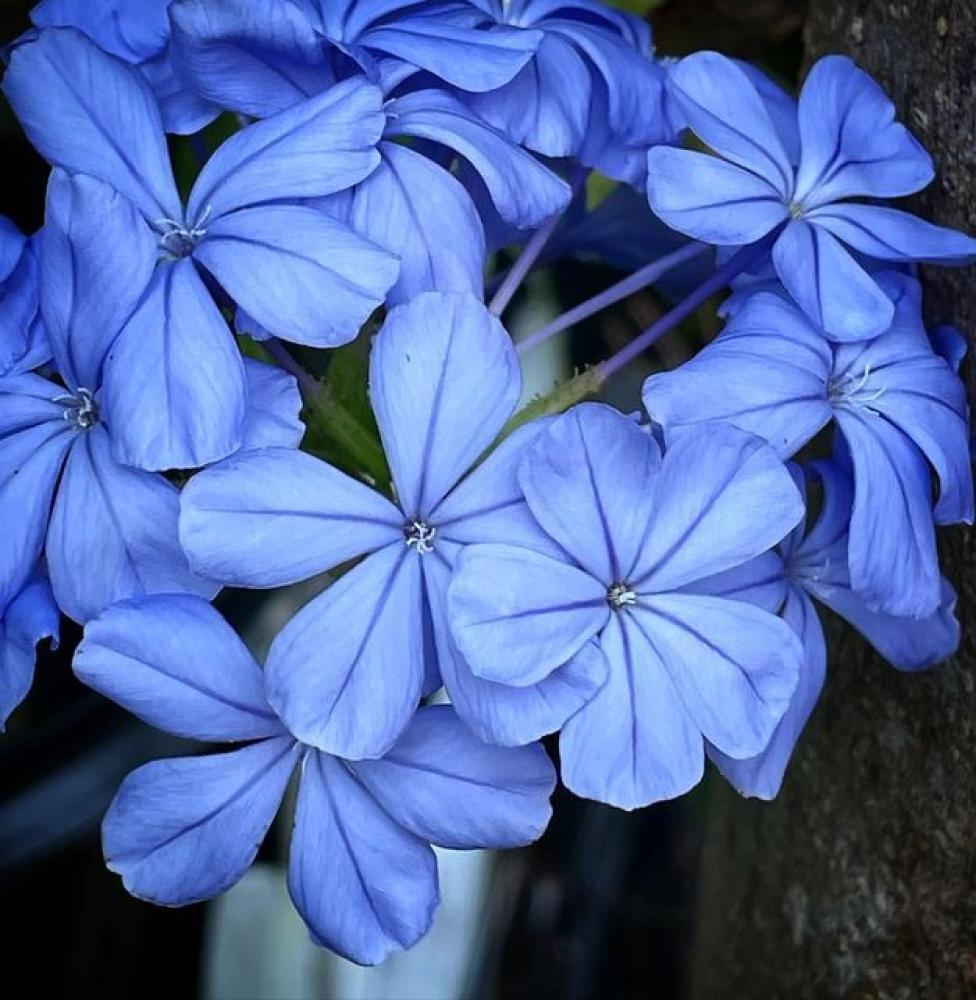
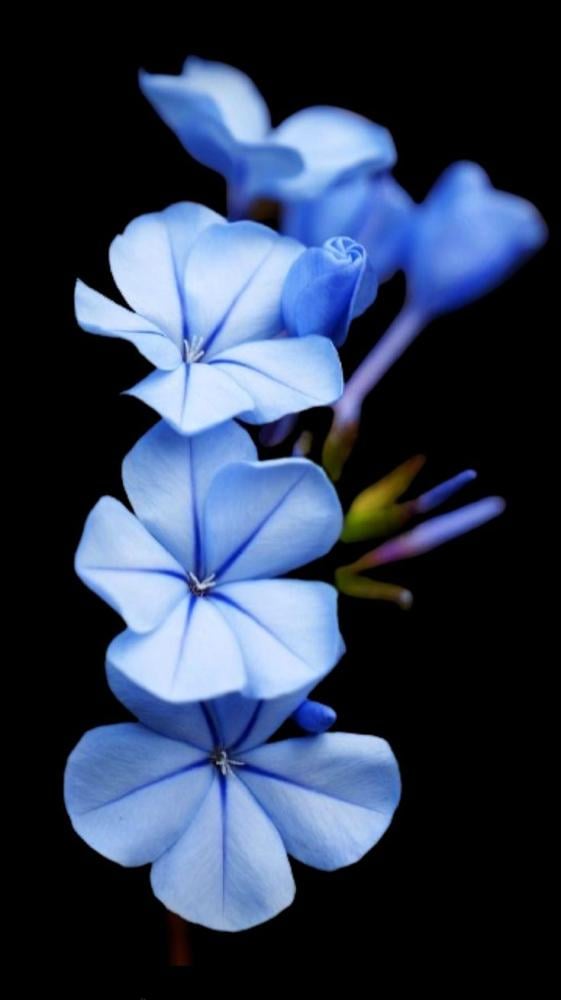
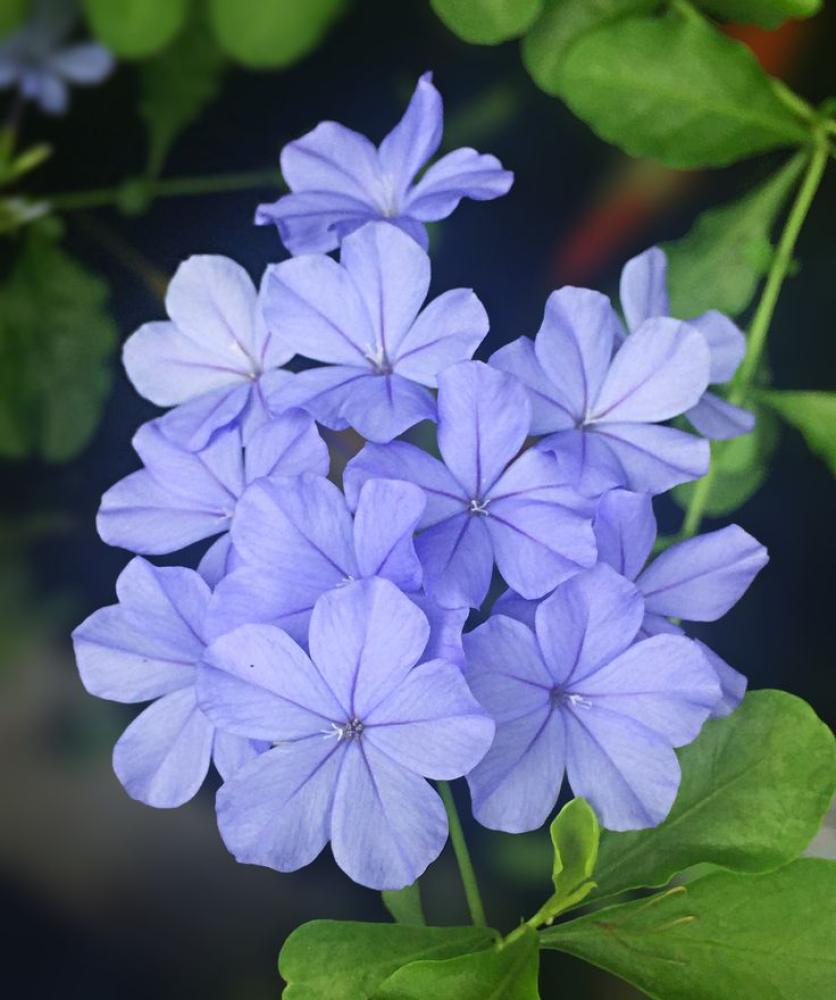
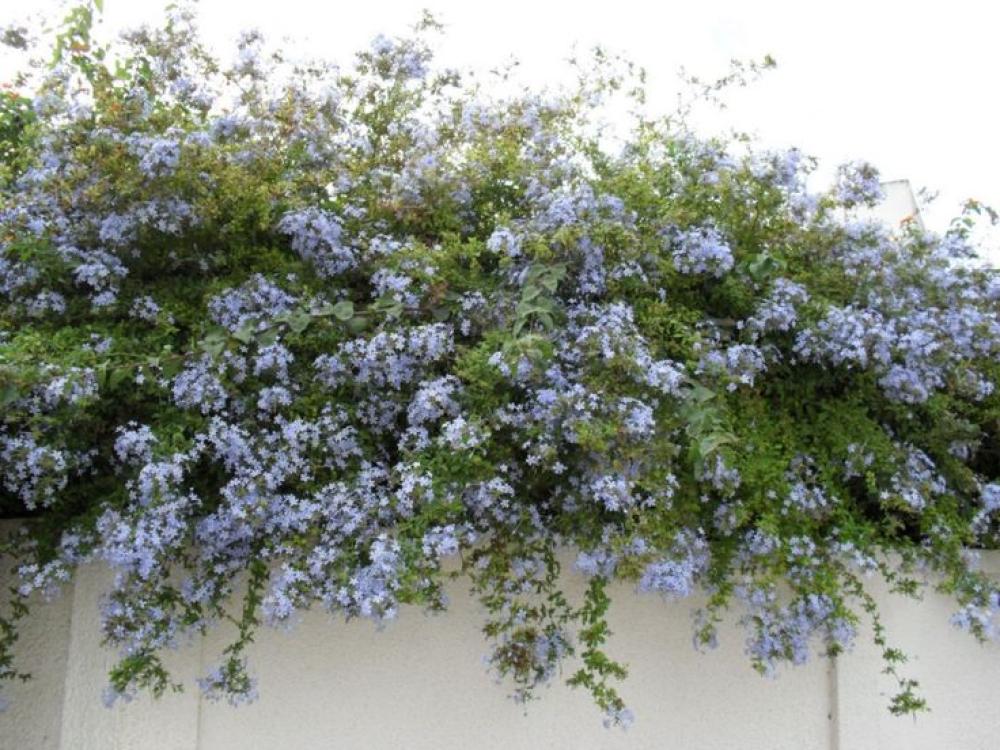
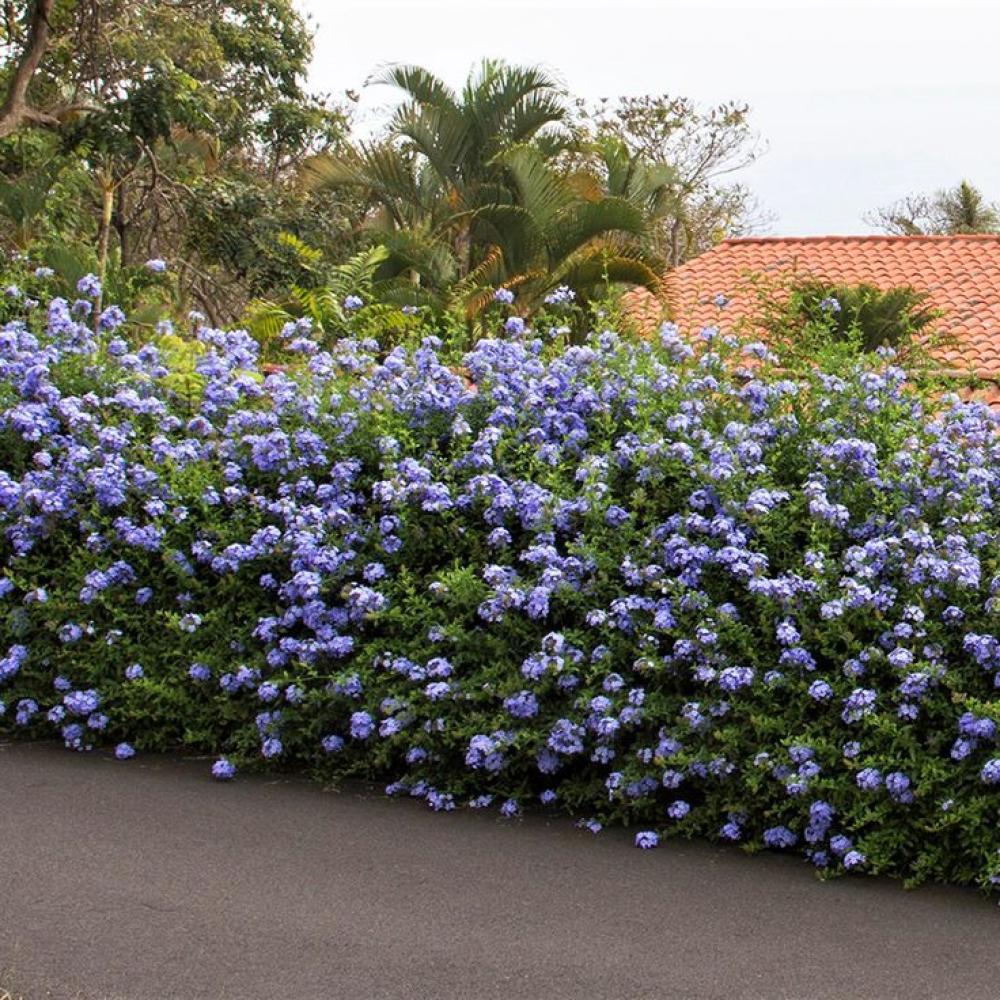
The blue jasmine plant's original habitat is the Cape region and Natal in South Africa. This plant grows up to 4 meters in height and 6 meters in width under optimal conditions. It seems to have adapted to Riyadh conditions, forming an excellent shrub or climber. The plant's leaves can stick to clothes and skin due to the secretion of some small glands on them. The second word of the scientific name (auriculata) refers to the ear-shaped base of the leaf, and the first word (Plumbago) refers to the Latin word for lead, as it is claimed to treat lead poisoning. The flowers appear from early June to September, either sky blue as in the Royal Cape variety or white as in the Alba variety. The plant's flowers attract butterflies. The fleshy fruits develop after pollination and fertilization, containing seeds inside. The fruits can stick to animals, which helps in their dispersal. This plant can be cultivated to cover fences, walls, and trellises. It tolerates severe pruning and may bloom in the same year. Due to its small size, it can climb trees without affecting their growth. The plant can be used to cover large areas because of its ability to branch laterally. It resists drought and grows in all types of soil, but it is best to water and fertilize it regularly, increasing organic matter in the soil. Frost can cause the leaves and small branches to die, but the plants recover quickly. It can be propagated by cuttings, side branches (suckers), and seeds.
General information about the blue jasmine plant:
Family name: Leadwort
Habitat: Tropical, Mediterranean, Subtropical
Humidity: Very humid, semi-humid
Propagation: Layering, cuttings, seed planting, and transplanting seedlings
Care: Moderate
Environmental conditions:
Urban environment: Resistant
Drought resistance: Sensitive
Humidity resistance: Sensitive
Irrigation: Moderate
Salinity level: Moderate (<3000 ppm)
Frost tolerance: -9°C
Plant height: 4 to 6 meters
Spread: 3 to 6 meters
Leaf nature: Evergreen
Flower color: Light blue
Size: 3 cm
Blooming period: From early June to the end of September
Fruit type: Capsule
Read more
Purchased
37 times
Description
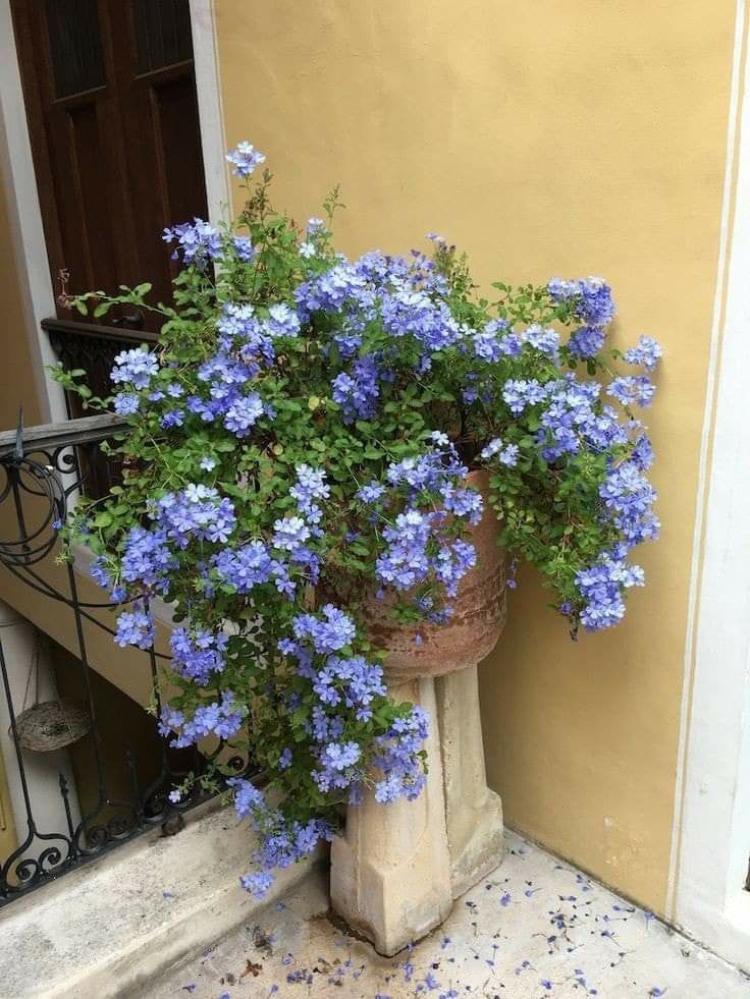
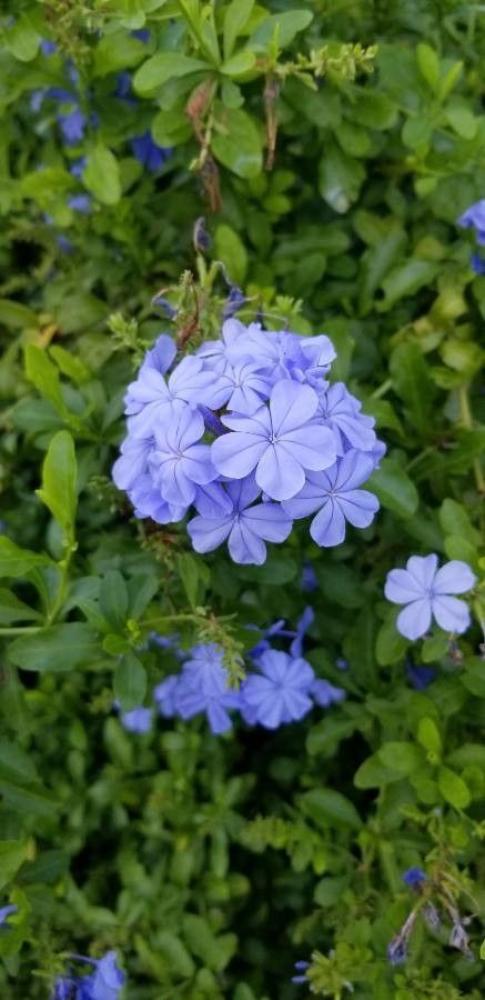
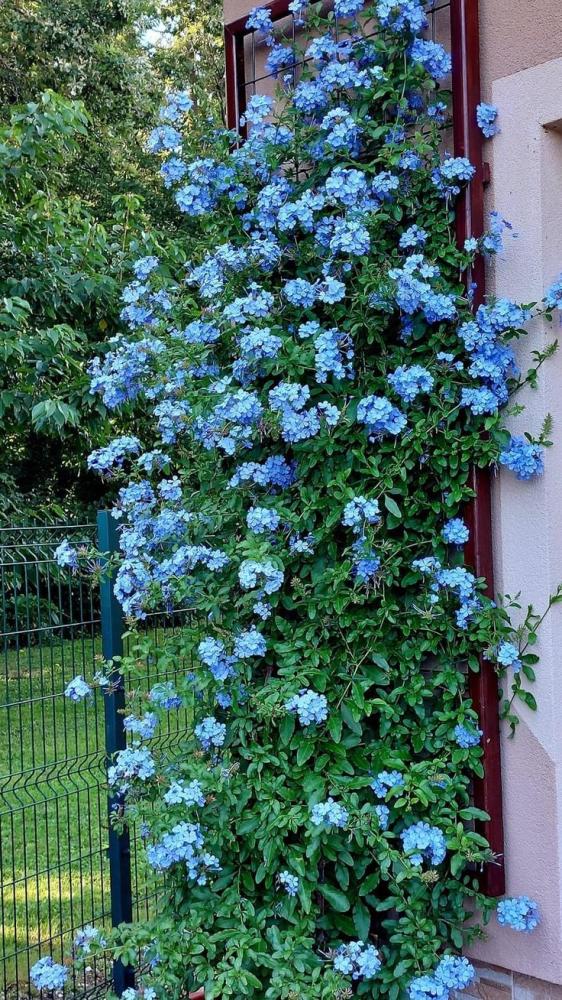
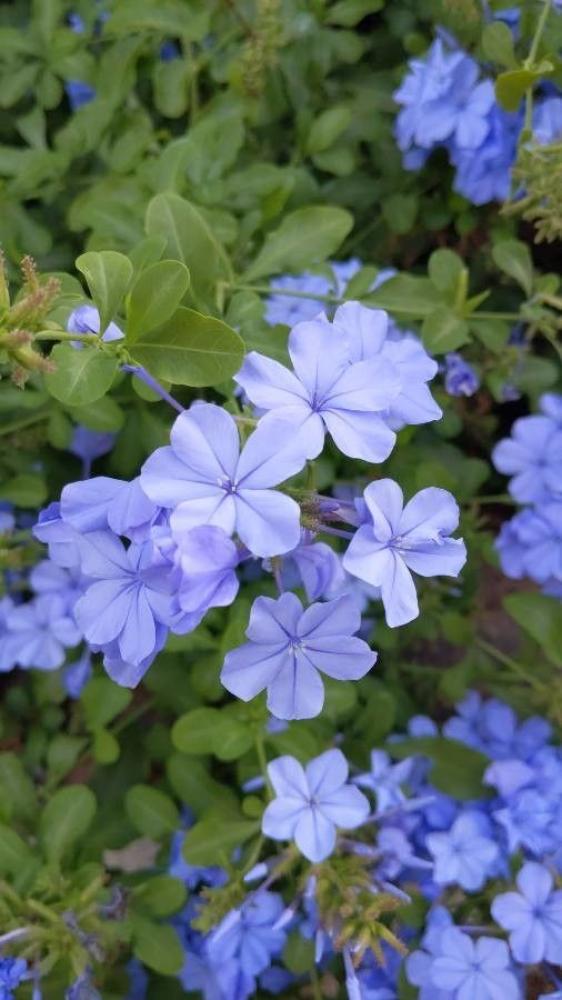
The blue jasmine plant's original habitat is the Cape region and Natal in South Africa. This plant grows up to 4 meters in height and 6 meters in width under optimal conditions. It seems to have adapted to Riyadh conditions, forming an excellent shrub or climber. The plant's leaves can stick to clothes and skin due to the secretion of some small glands on them. The second word of the scientific name (auriculata) refers to the ear-shaped base of the leaf, and the first word (Plumbago) refers to the Latin word for lead, as it is claimed to treat lead poisoning. The flowers appear from early June to September, either sky blue as in the Royal Cape variety or white as in the Alba variety. The plant's flowers attract butterflies. The fleshy fruits develop after pollination and fertilization, containing seeds inside. The fruits can stick to animals, which helps in their dispersal. This plant can be cultivated to cover fences, walls, and trellises. It tolerates severe pruning and may bloom in the same year. Due to its small size, it can climb trees without affecting their growth. The plant can be used to cover large areas because of its ability to branch laterally. It resists drought and grows in all types of soil, but it is best to water and fertilize it regularly, increasing organic matter in the soil. Frost can cause the leaves and small branches to die, but the plants recover quickly. It can be propagated by cuttings, side branches (suckers), and seeds.
General information about the blue jasmine plant:
Family name: Leadwort
Habitat: Tropical, Mediterranean, Subtropical
Humidity: Very humid, semi-humid
Propagation: Layering, cuttings, seed planting, and transplanting seedlings
Care: Moderate
Environmental conditions:
Urban environment: Resistant
Drought resistance: Sensitive
Humidity resistance: Sensitive
Irrigation: Moderate
Salinity level: Moderate (<3000 ppm)
Frost tolerance: -9°C
Plant height: 4 to 6 meters
Spread: 3 to 6 meters
Leaf nature: Evergreen
Flower color: Light blue
Size: 3 cm
Blooming period: From early June to the end of September
Fruit type: Capsule
Read more