Neem tree or common neem or Indian neem or Indian azadirachta
Common name: Neem tree or common neem or Indian neem or Indian azadirachta
Scientific name: Azadirachta indica
Family: Meliaceae
Plant type: A tree known for a very long time. Characterized by its ability to purify soil from salts. It is a perennial tree that can live up to 180 years, and its lifespan in the forest can extend to 200 years.
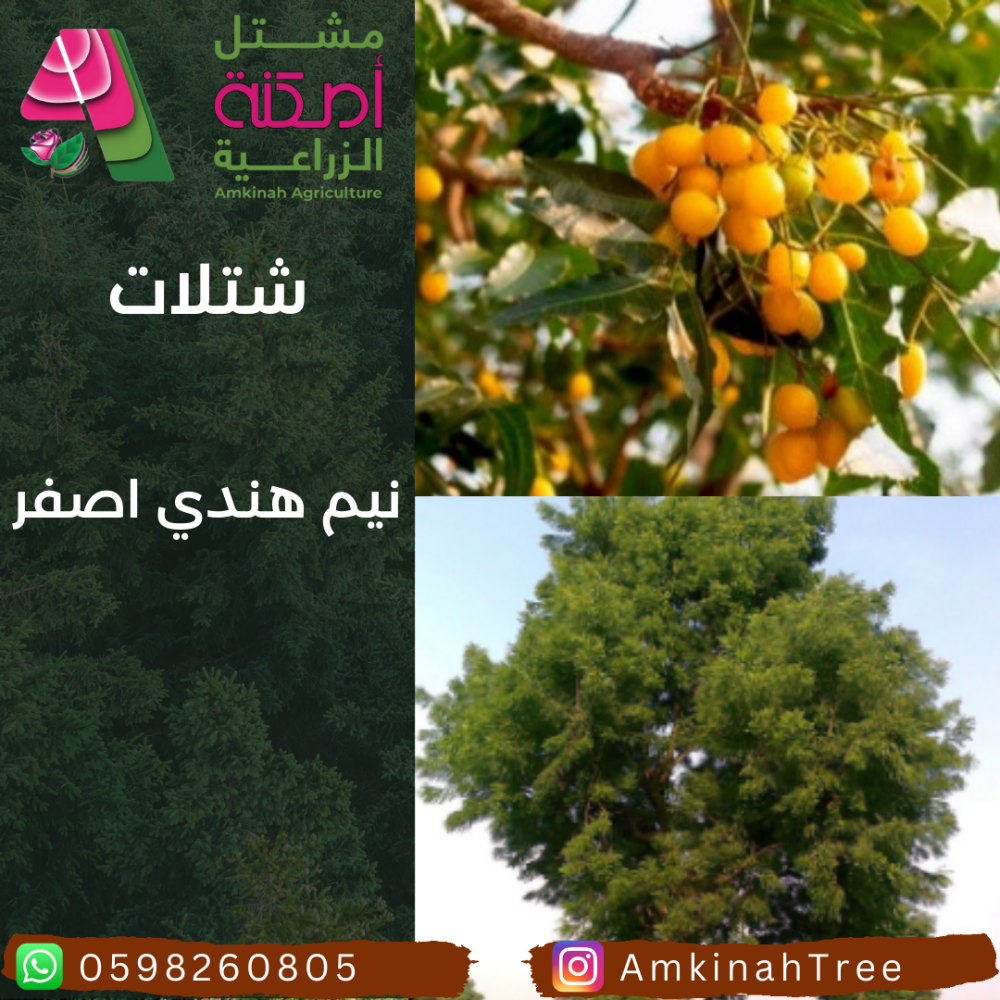
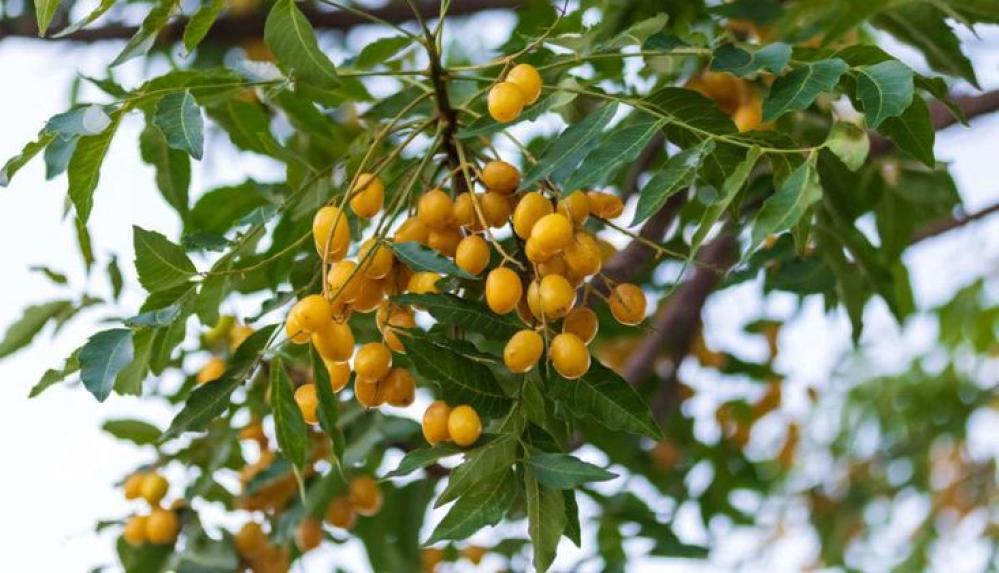
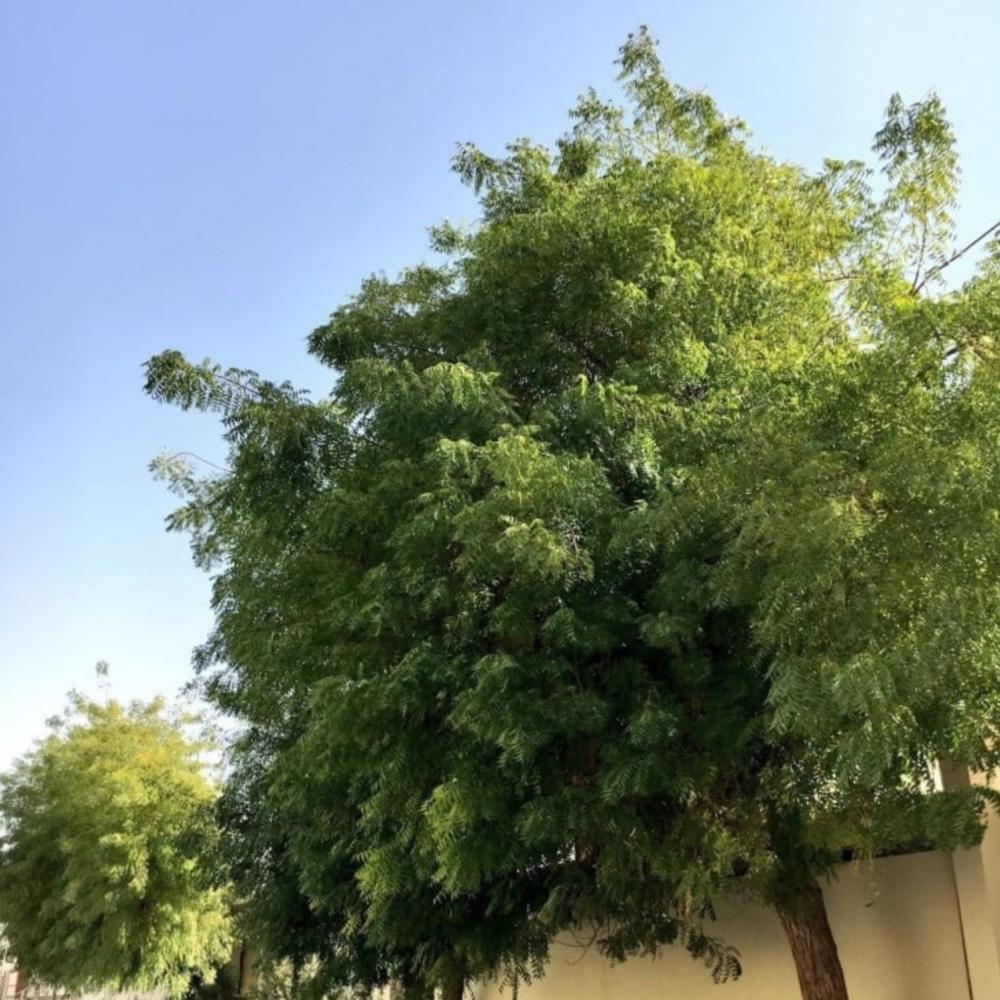
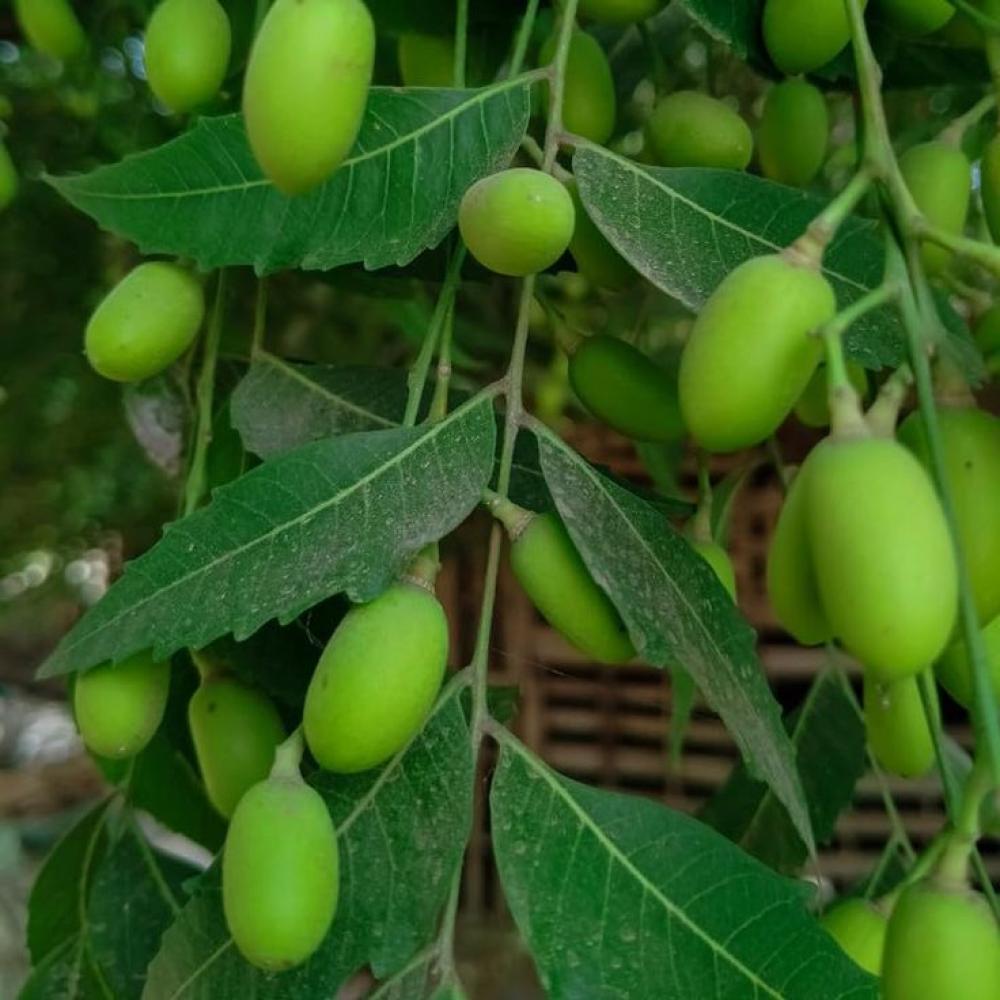
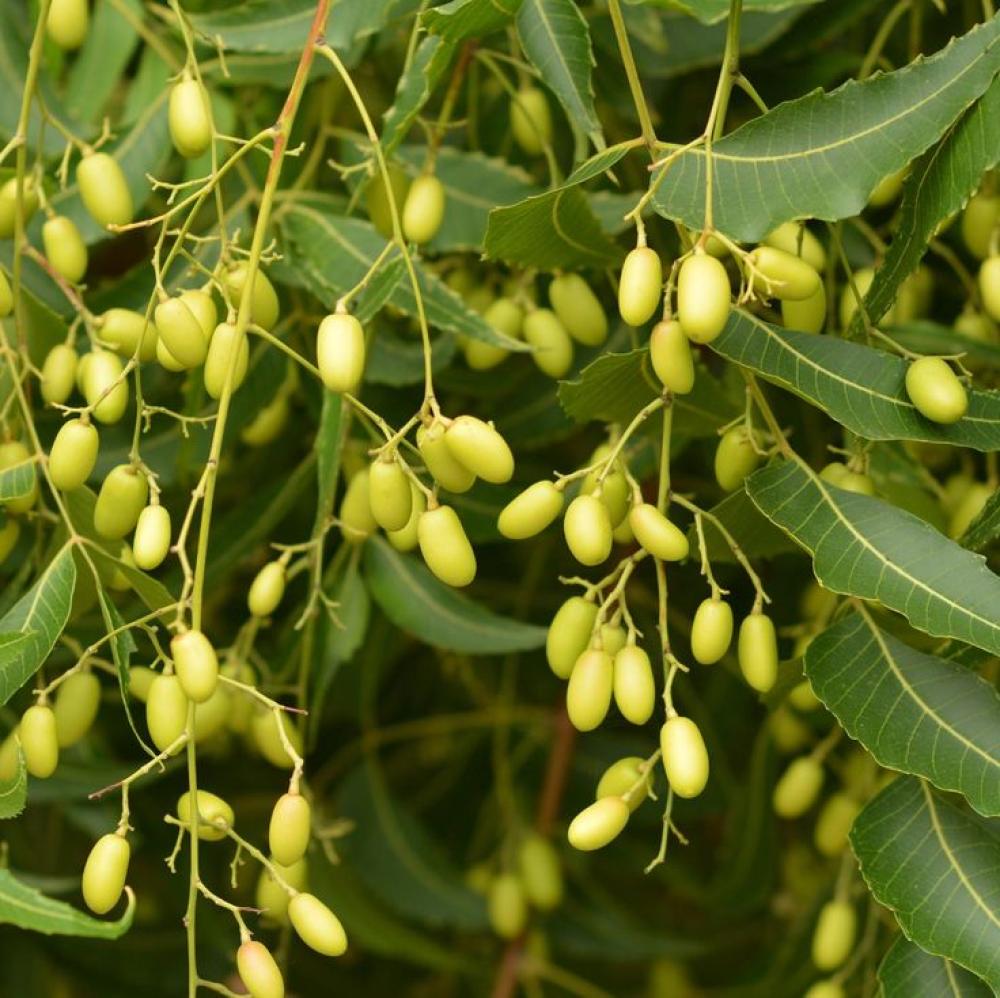
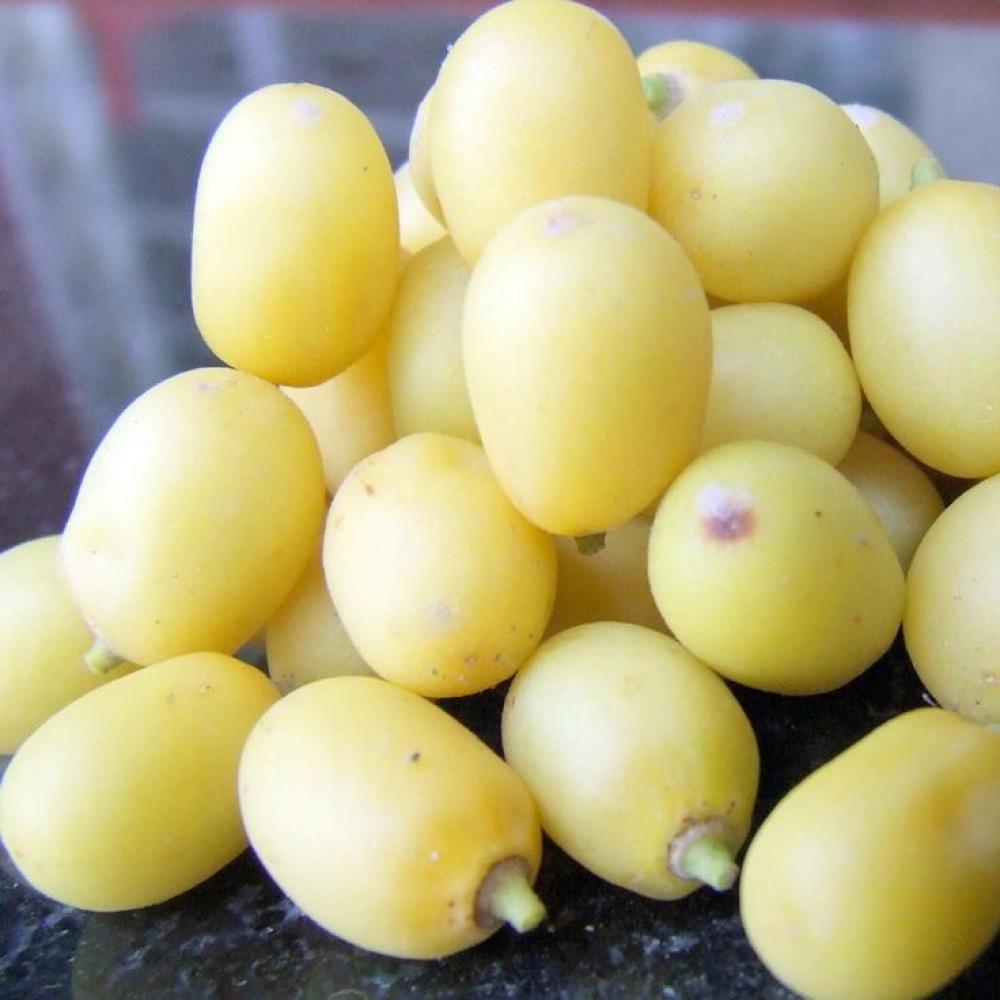
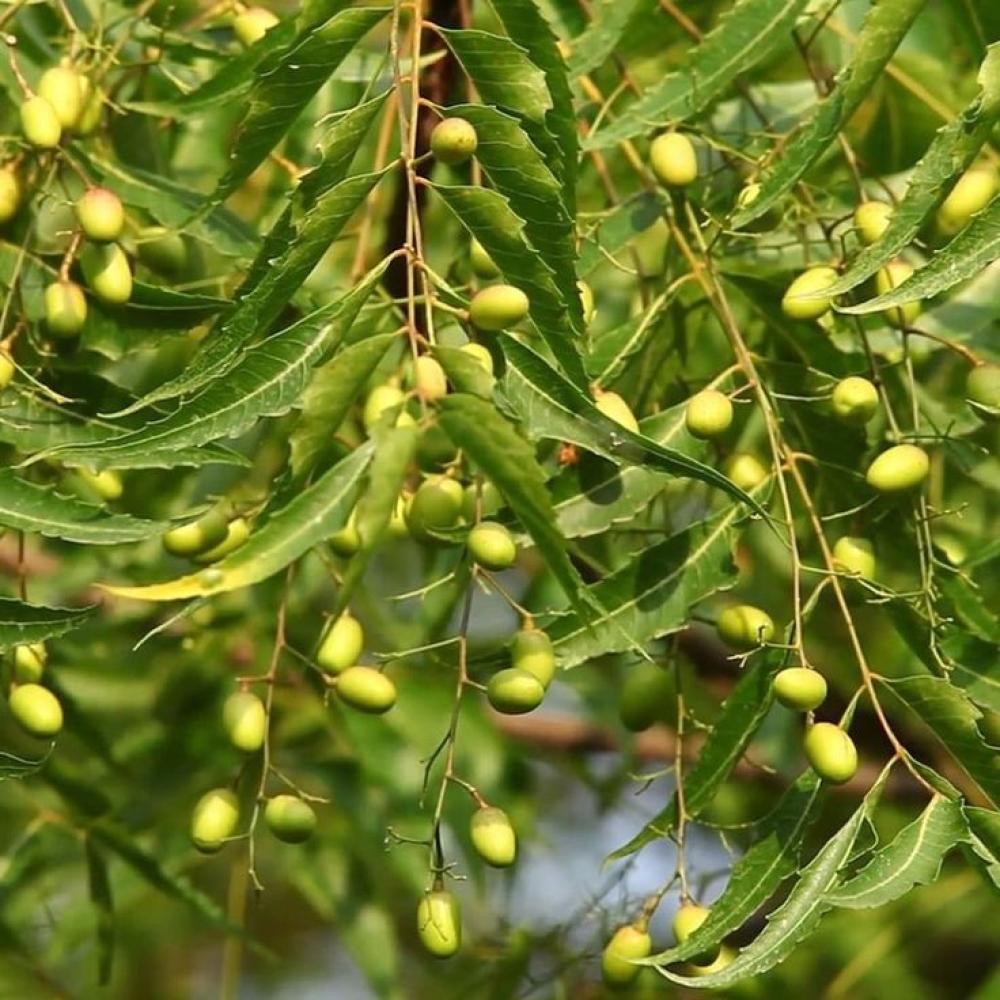
Description and suitable climate: The neem is a fast-growing tree with dense, evergreen shade, growing densely and representing a main appearance of greenery in the forest. Its height reaches 16 meters and sometimes 25 meters, and its overall green canopy diameter reaches ten meters. It is a woody tree distinguished by its large root size, with roots extending widely sideways rather than deep; therefore, when planting neem trees, a distance of at least 3 meters between each tree should be maintained. The tree features a tough, solid trunk, dark brown, with a diameter between 75 and 150 centimeters, and a cracked brown bark. Leaves gather at the ends of branches, with leaf length reaching 30 centimeters. Its leaves are compound, consisting of several opposite leaflets, up to seventeen leaflets. The lateral inflorescence bears many flowers, reaching 20 centimeters in length. The flower is white and fragrant, while the fruit is elongated, about one centimeter long, green turning yellow when ripe. It has a single seed and sweet pulp that is edible.
Propagation: By seed
Planting season: February and March
Comments: Its original habitat is forest and timber areas in India and Sri Lanka, known in India as (Margosa). The first place where neem trees were found is northern India, especially an area called Karnataka. Neem trees are also spread in tropical and subtropical regions such as Indonesia and Sudan. It was introduced by Indian settlers to Africa in the late 19th century. German botanist Dr. Schumtrer mentioned in his book about the neem plant that these trees have been cultivated in Sudan since 1921, especially around the Blue Nile and White Nile rivers. Recently, about 4000 neem trees have been planted in Egypt, especially in the Delta region, and they grow successfully in hot areas. Its cultivation is widespread in northern and central Sudan, and it has successfully been cultivated in southern Saudi Arabia, introduced to Mecca region, and grown successfully in Mount Rahmah, Arafat area, and Jazan region. The main benefit of neem lies in its ability to prevent various types of insects, especially mosquitoes and flies, from entering homes.
Read more
Purchased
8 times
Description
Neem tree or common neem or Indian neem or Indian azadirachta
Common name: Neem tree or common neem or Indian neem or Indian azadirachta
Scientific name: Azadirachta indica
Family: Meliaceae
Plant type: A tree known for a very long time. Characterized by its ability to purify soil from salts. It is a perennial tree that can live up to 180 years, and its lifespan in the forest can extend to 200 years.
Description and suitable climate: The neem is a fast-growing tree with dense, evergreen shade, growing densely and representing a main appearance of greenery in the forest. Its height reaches 16 meters and sometimes 25 meters, and its overall green canopy diameter reaches ten meters. It is a woody tree distinguished by its large root size, with roots extending widely sideways rather than deep; therefore, when planting neem trees, a distance of at least 3 meters between each tree should be maintained. The tree features a tough, solid trunk, dark brown, with a diameter between 75 and 150 centimeters, and a cracked brown bark. Leaves gather at the ends of branches, with leaf length reaching 30 centimeters. Its leaves are compound, consisting of several opposite leaflets, up to seventeen leaflets. The lateral inflorescence bears many flowers, reaching 20 centimeters in length. The flower is white and fragrant, while the fruit is elongated, about one centimeter long, green turning yellow when ripe. It has a single seed and sweet pulp that is edible.
Propagation: By seed
Planting season: February and March
Comments: Its original habitat is forest and timber areas in India and Sri Lanka, known in India as (Margosa). The first place where neem trees were found is northern India, especially an area called Karnataka. Neem trees are also spread in tropical and subtropical regions such as Indonesia and Sudan. It was introduced by Indian settlers to Africa in the late 19th century. German botanist Dr. Schumtrer mentioned in his book about the neem plant that these trees have been cultivated in Sudan since 1921, especially around the Blue Nile and White Nile rivers. Recently, about 4000 neem trees have been planted in Egypt, especially in the Delta region, and they grow successfully in hot areas. Its cultivation is widespread in northern and central Sudan, and it has successfully been cultivated in southern Saudi Arabia, introduced to Mecca region, and grown successfully in Mount Rahmah, Arafat area, and Jazan region. The main benefit of neem lies in its ability to prevent various types of insects, especially mosquitoes and flies, from entering homes.
Read more