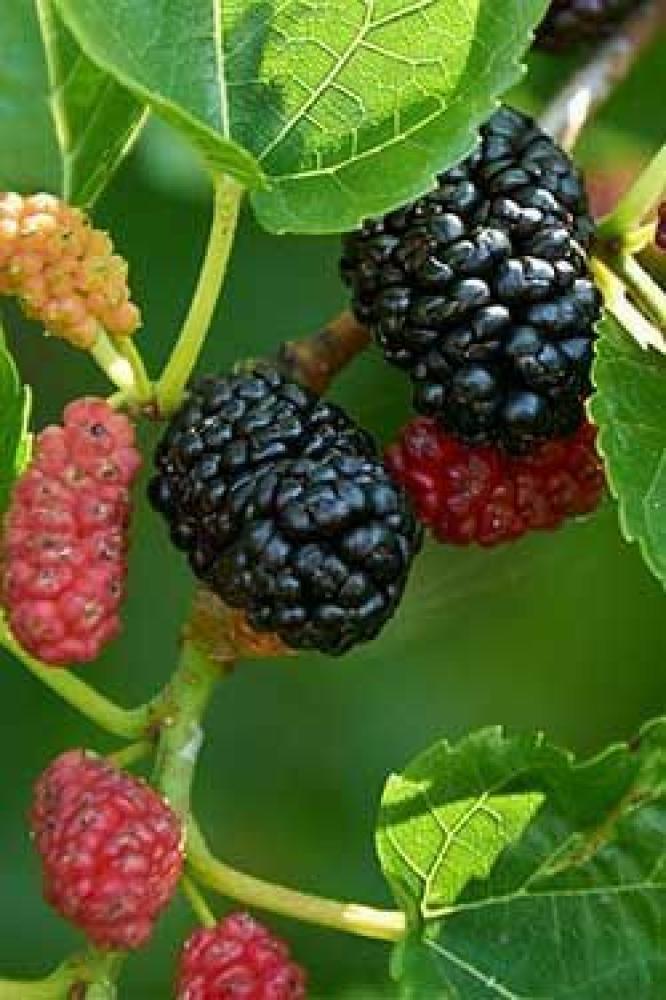
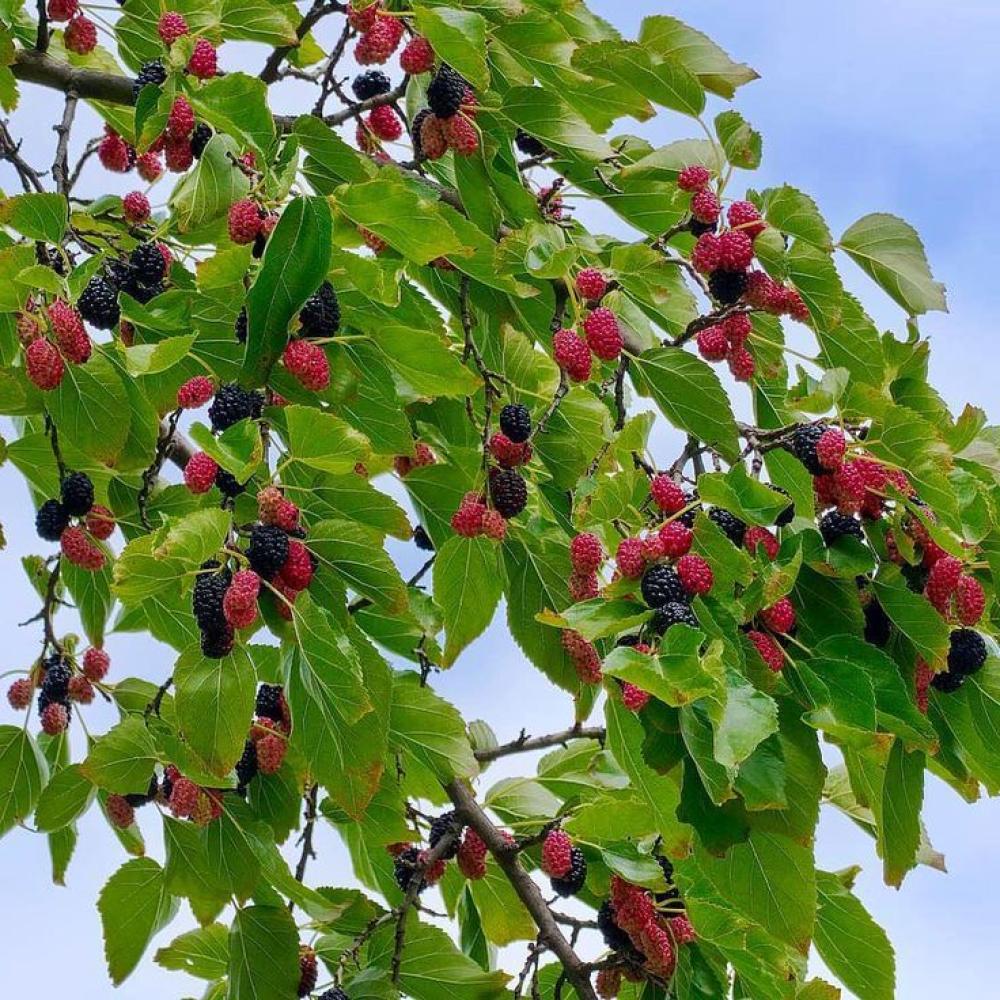
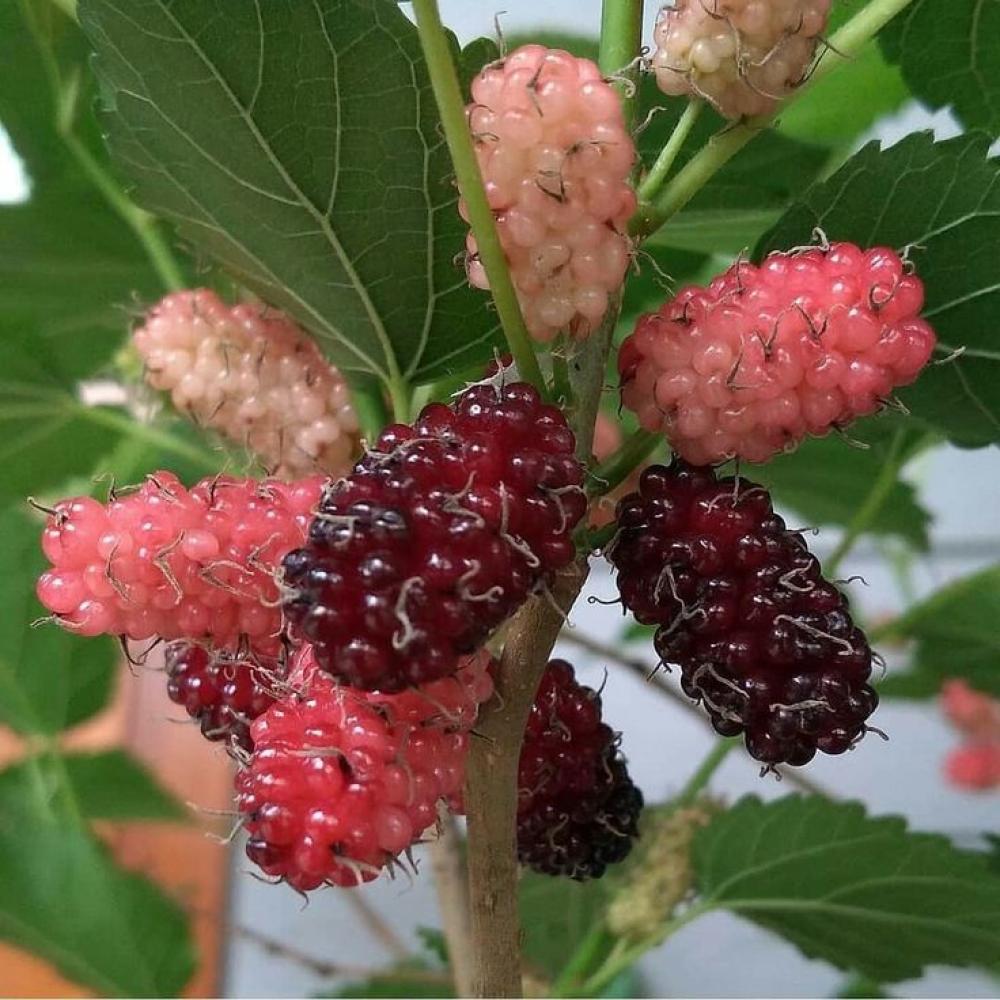
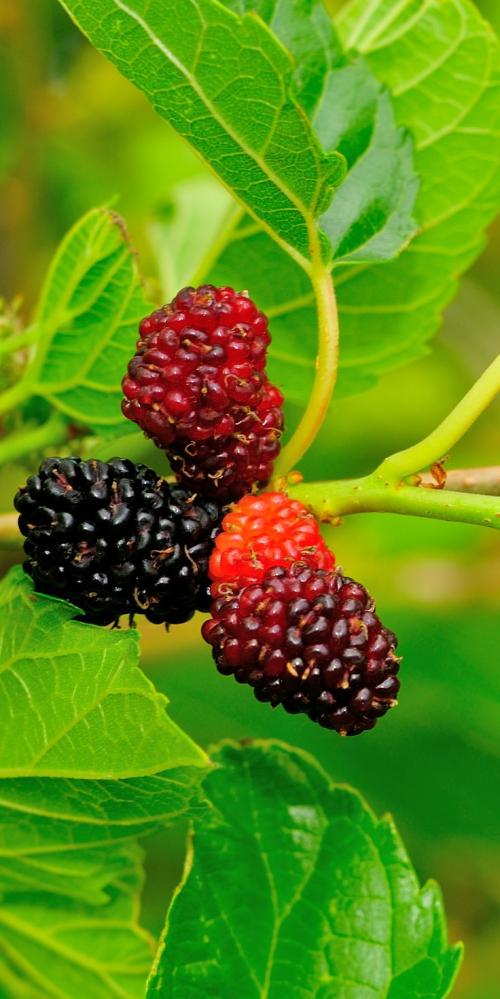
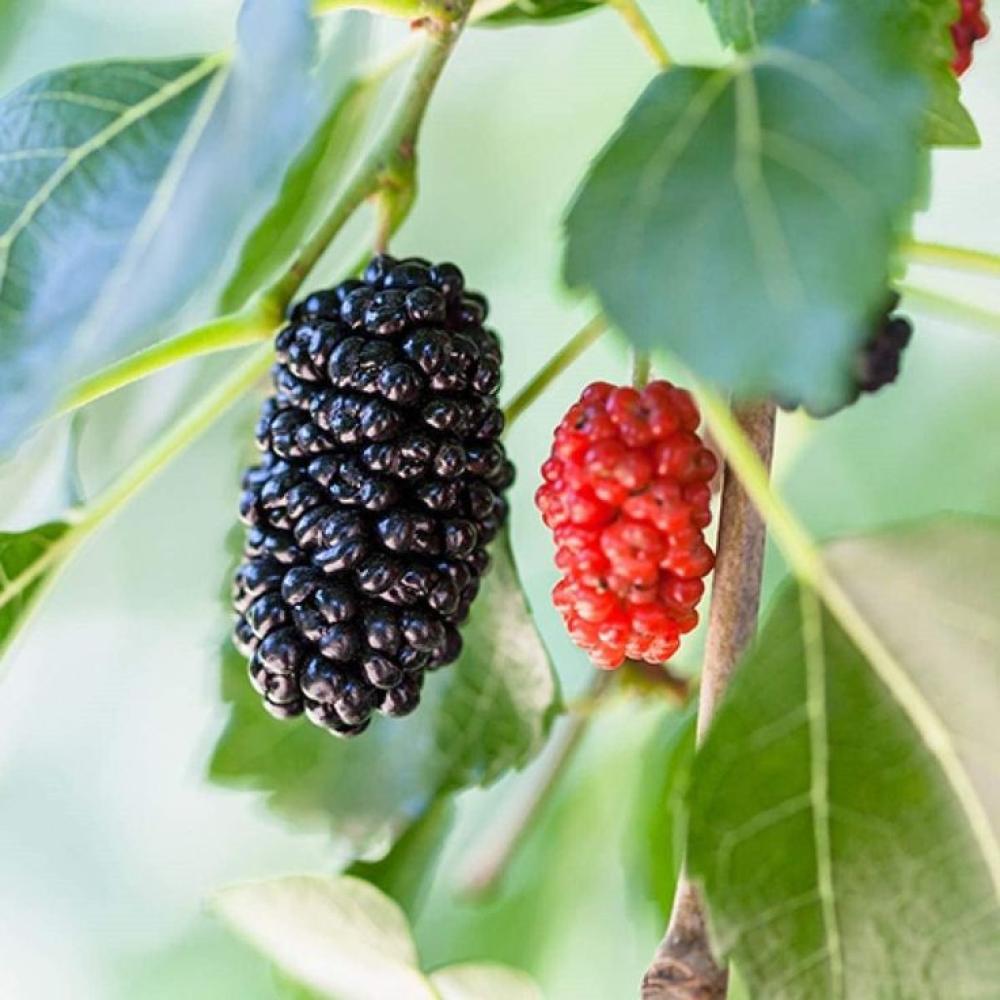
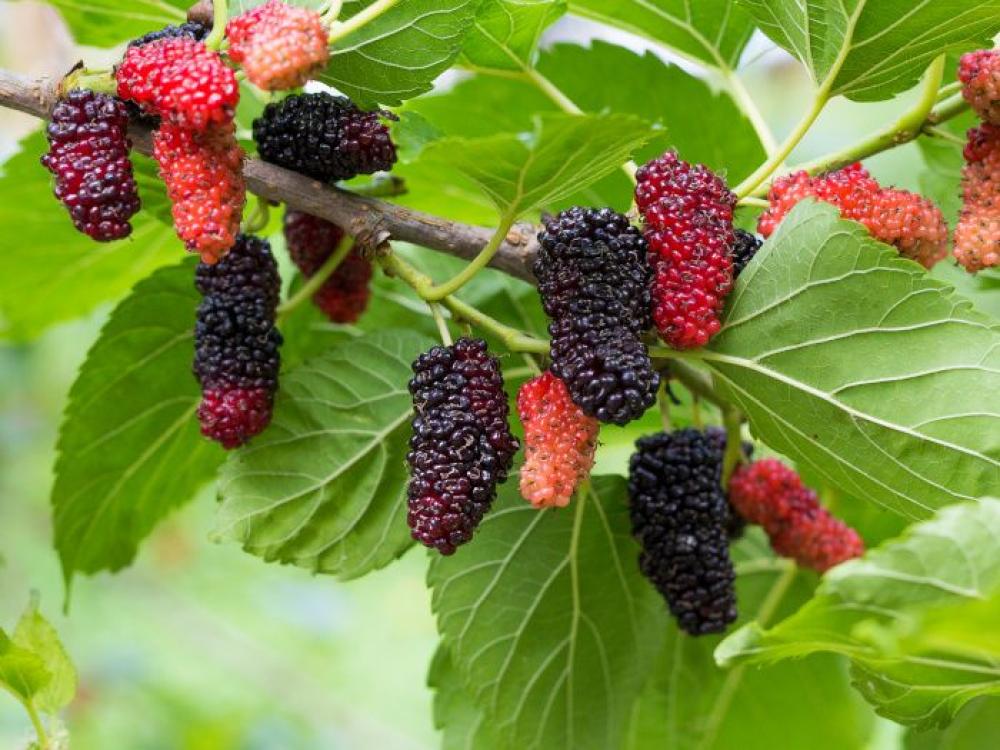
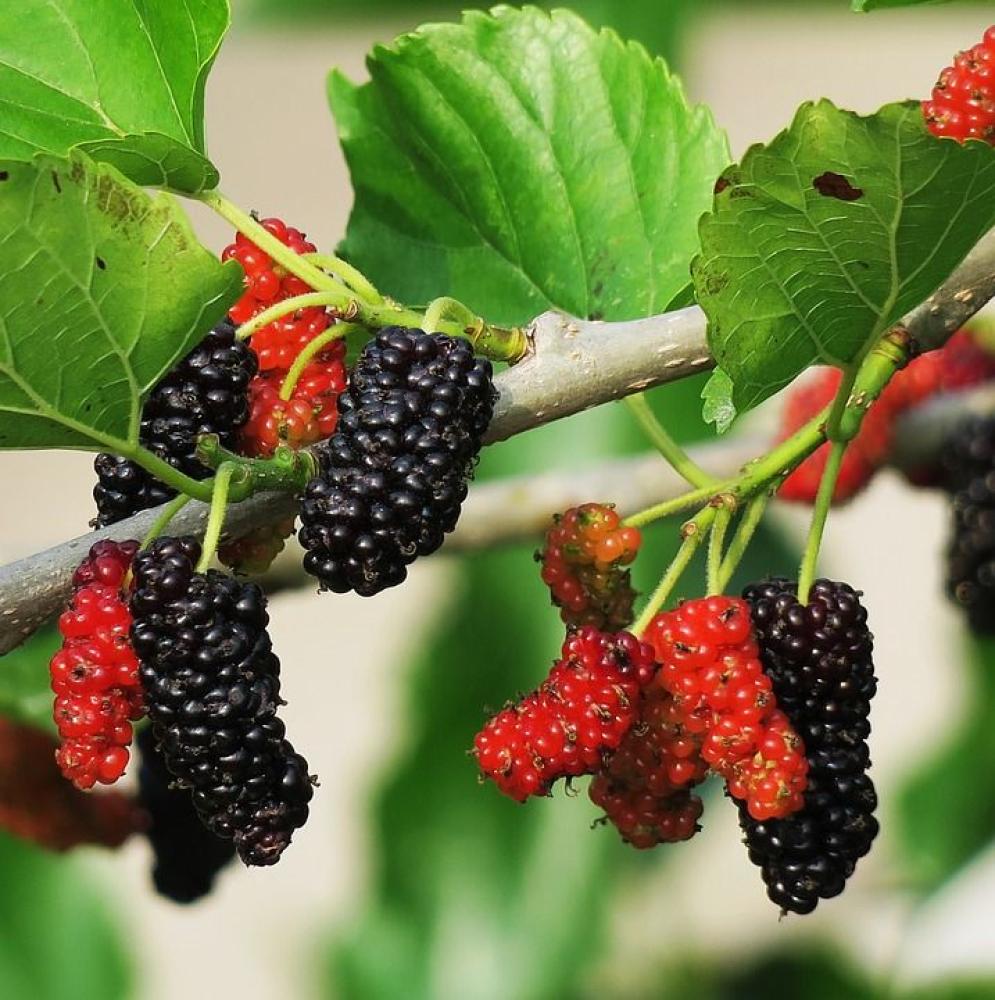
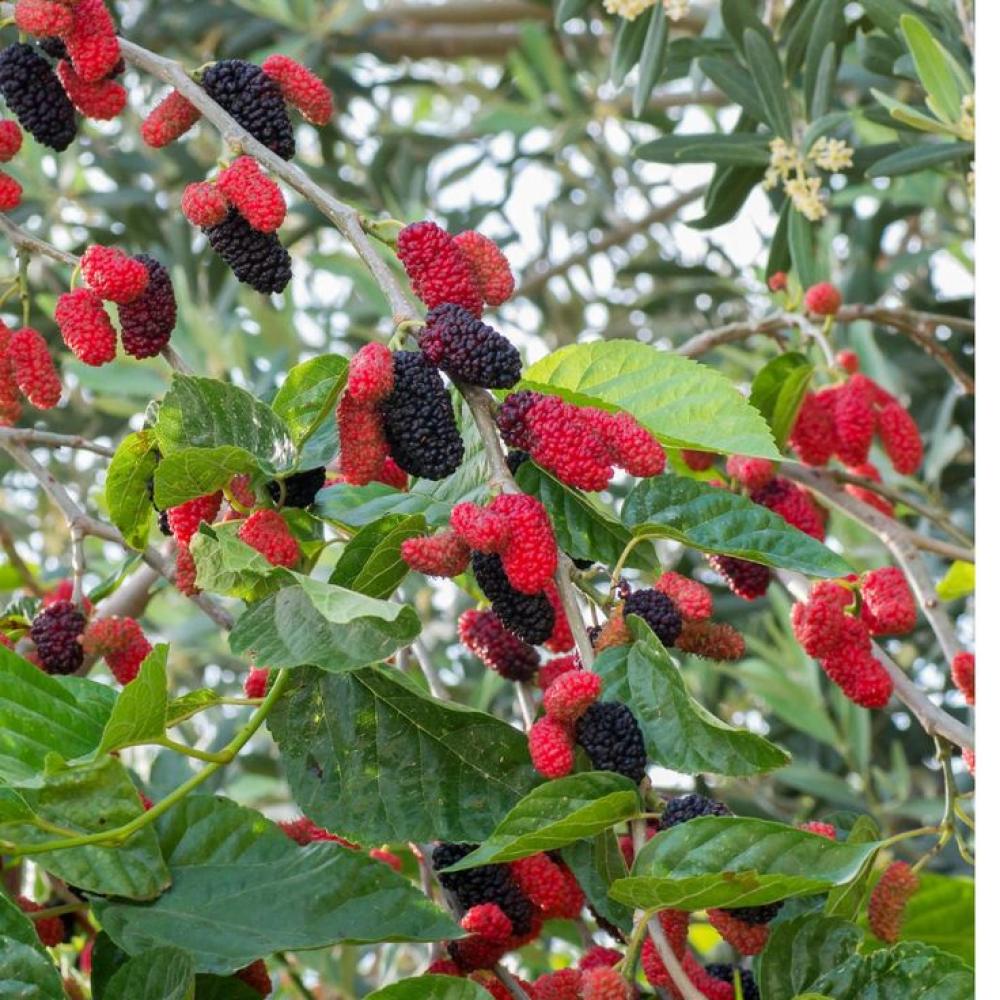
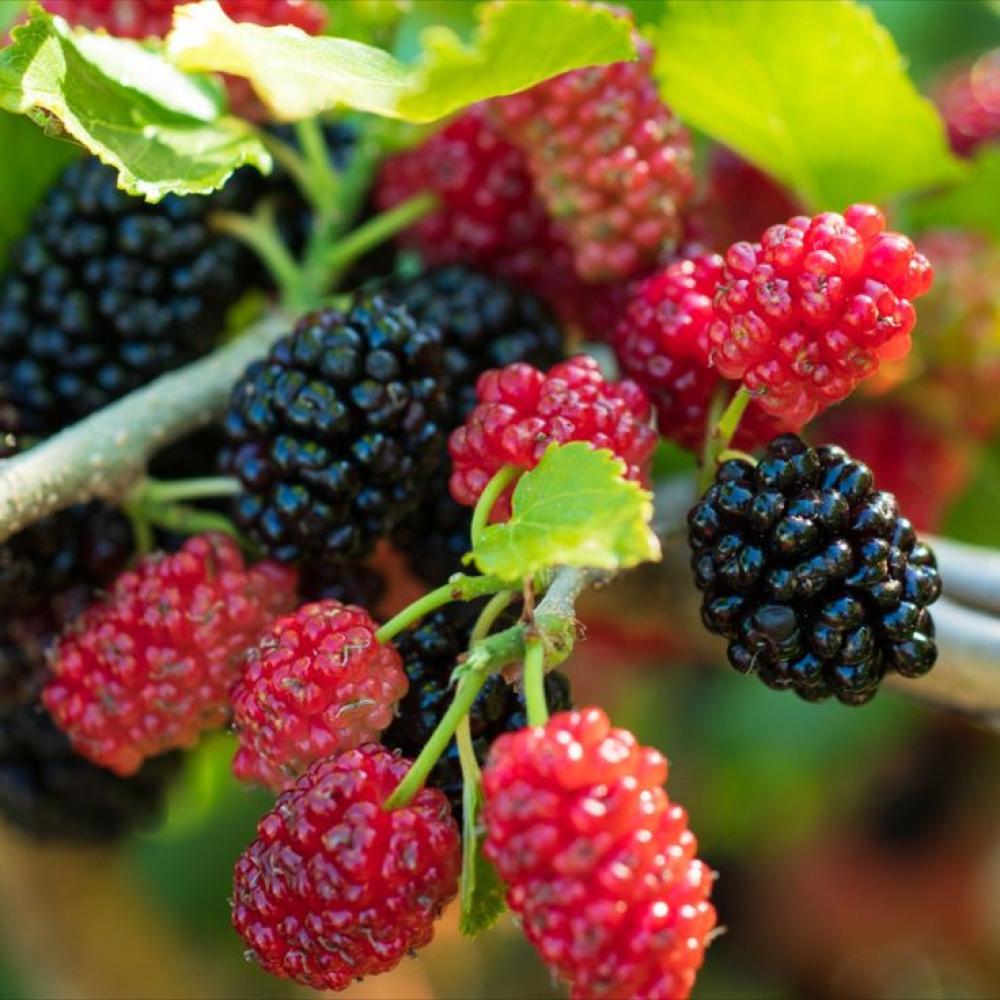
Local mulberry tree or black mulberry tree, a deciduous tree. Mulberry originated from West Africa, prefers to grow in regions with a moderate climate. Mulberry is the host plant for silkworms used in silk production. Mulberry grows up to a height of 6 to 15 meters, with a crown spread of about the same. The crown is round and regular in shape. The leaves are dark green and fuzzy underneath. The leaves are alternate, ovate, with serrated edges. The flowers are not conspicuous, but the fruit is clustered, black in color, resembling a cranberry. The fruit's juice is bright in color, and planting the tree near walkways should be avoided to prevent the fruit's color from staining the pavements. Therefore, varieties that produce fruits are preferred in landscape design. The fruits are edible. Mulberry prefers to grow in permeable calcareous soils. The tree propagates by seeds, which should be planted immediately after extraction from the fruit. Mulberry can withstand the small climate of urban areas but is susceptible to drought. Hence, mulberry needs good irrigation, noting that the water should be low in salinity. Due to the specific requirements of mulberry, it is recommended to cultivate it under protected conditions to make the small climate more humid, such as planting in green spaces. Mulberry may suffer from frost damage, so it is recommended to plant young trees in protected locations (such as between palm trees). Mulberry can be used in urban landscaping in public open spaces, park planting, and private parks. Mulberry is an attractive tree when used in landscaping as a distinctive individual specimen or when planted in groups. Mulberry requires limited care. Usually, pruning is not necessary for this slow-growing tree. Family name: Moraceae. Native to: Mediterranean, semi-tropical, Mediterranean-like, moderate humidity: very humid, semi-humid, semi-arid. Propagation: cuttings, seed planting, and transplanting seedlings. Care: low. Environmental conditions: urban environment: drought-resistant: sensitive. Flooded environment: sensitive. Irrigation: moderate. Salinity level: low (<1000 ppm). Frost tolerance: -18°C.
Local mulberry tree height: 6 to 15 meters. Spread: 6 to 15 meters. Leaf nature: deciduous. Flower color: green. Size: 1.5 cm. Flowering period: from early May to the end of May.
Local mulberry tree fruit type: edible (fleshy, juicy). Size: 1 to 3 cm. Edible, food.
Read more
Purchased
28 times
Description
Local mulberry tree or black mulberry tree, a deciduous tree. Mulberry originated from West Africa, prefers to grow in regions with a moderate climate. Mulberry is the host plant for silkworms used in silk production. Mulberry grows up to a height of 6 to 15 meters, with a crown spread of about the same. The crown is round and regular in shape. The leaves are dark green and fuzzy underneath. The leaves are alternate, ovate, with serrated edges. The flowers are not conspicuous, but the fruit is clustered, black in color, resembling a cranberry. The fruit's juice is bright in color, and planting the tree near walkways should be avoided to prevent the fruit's color from staining the pavements. Therefore, varieties that produce fruits are preferred in landscape design. The fruits are edible. Mulberry prefers to grow in permeable calcareous soils. The tree propagates by seeds, which should be planted immediately after extraction from the fruit. Mulberry can withstand the small climate of urban areas but is susceptible to drought. Hence, mulberry needs good irrigation, noting that the water should be low in salinity. Due to the specific requirements of mulberry, it is recommended to cultivate it under protected conditions to make the small climate more humid, such as planting in green spaces. Mulberry may suffer from frost damage, so it is recommended to plant young trees in protected locations (such as between palm trees). Mulberry can be used in urban landscaping in public open spaces, park planting, and private parks. Mulberry is an attractive tree when used in landscaping as a distinctive individual specimen or when planted in groups. Mulberry requires limited care. Usually, pruning is not necessary for this slow-growing tree. Family name: Moraceae. Native to: Mediterranean, semi-tropical, Mediterranean-like, moderate humidity: very humid, semi-humid, semi-arid. Propagation: cuttings, seed planting, and transplanting seedlings. Care: low. Environmental conditions: urban environment: drought-resistant: sensitive. Flooded environment: sensitive. Irrigation: moderate. Salinity level: low (<1000 ppm). Frost tolerance: -18°C.
Local mulberry tree height: 6 to 15 meters. Spread: 6 to 15 meters. Leaf nature: deciduous. Flower color: green. Size: 1.5 cm. Flowering period: from early May to the end of May.
Local mulberry tree fruit type: edible (fleshy, juicy). Size: 1 to 3 cm. Edible, food.
Read more