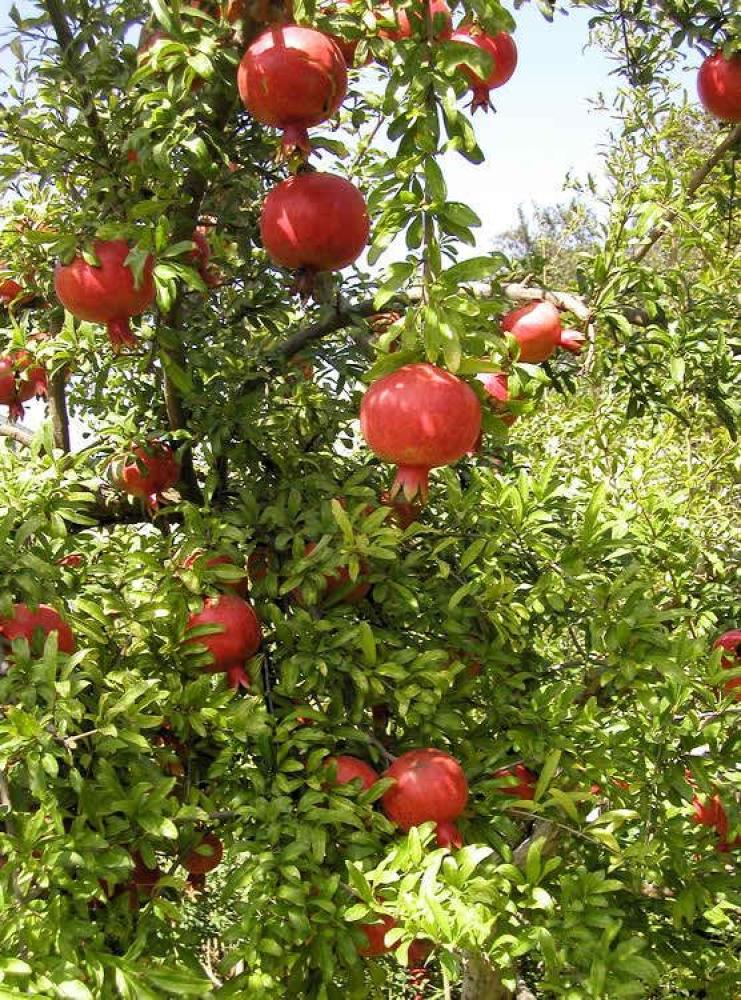
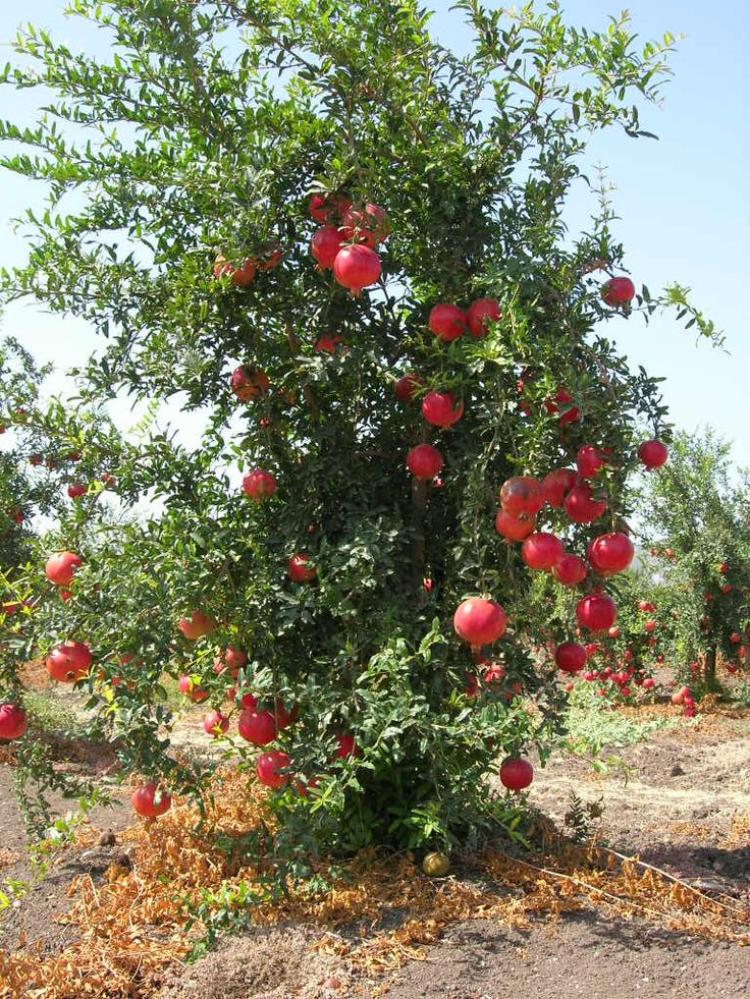
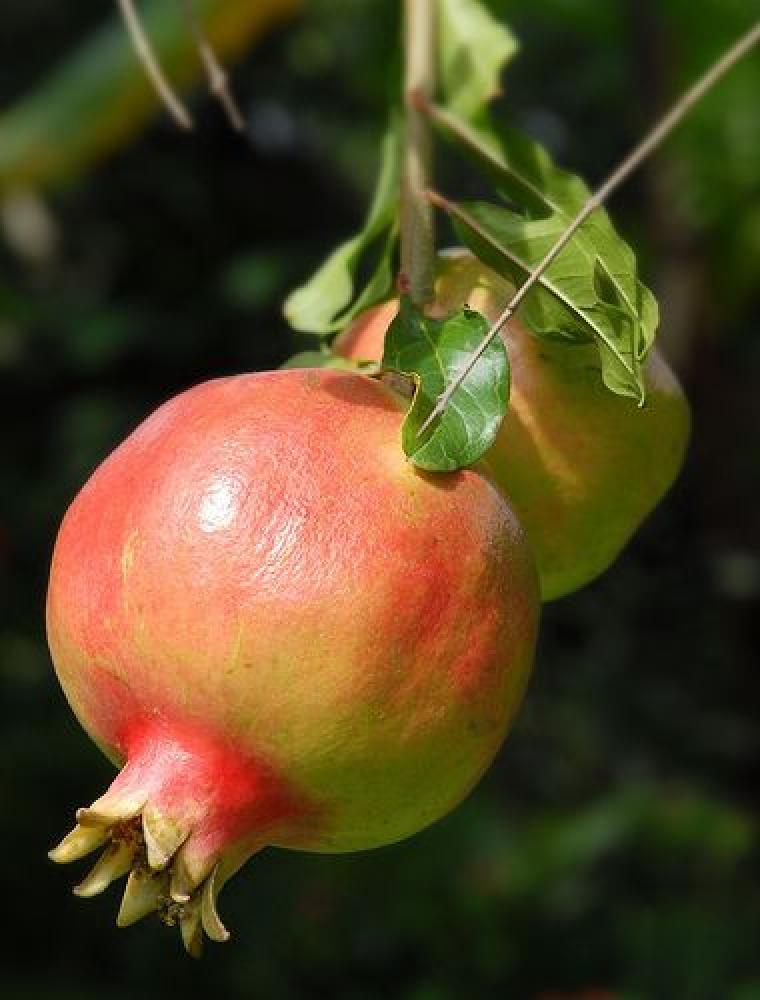
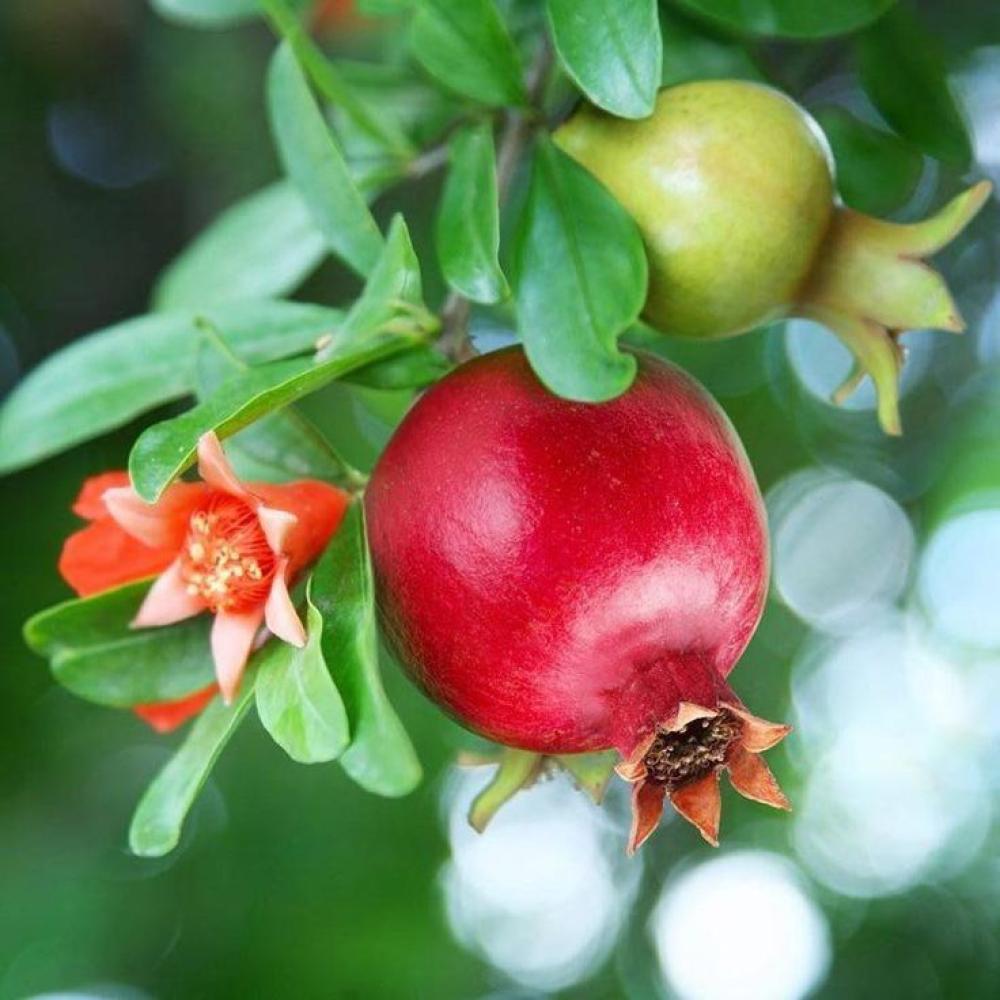
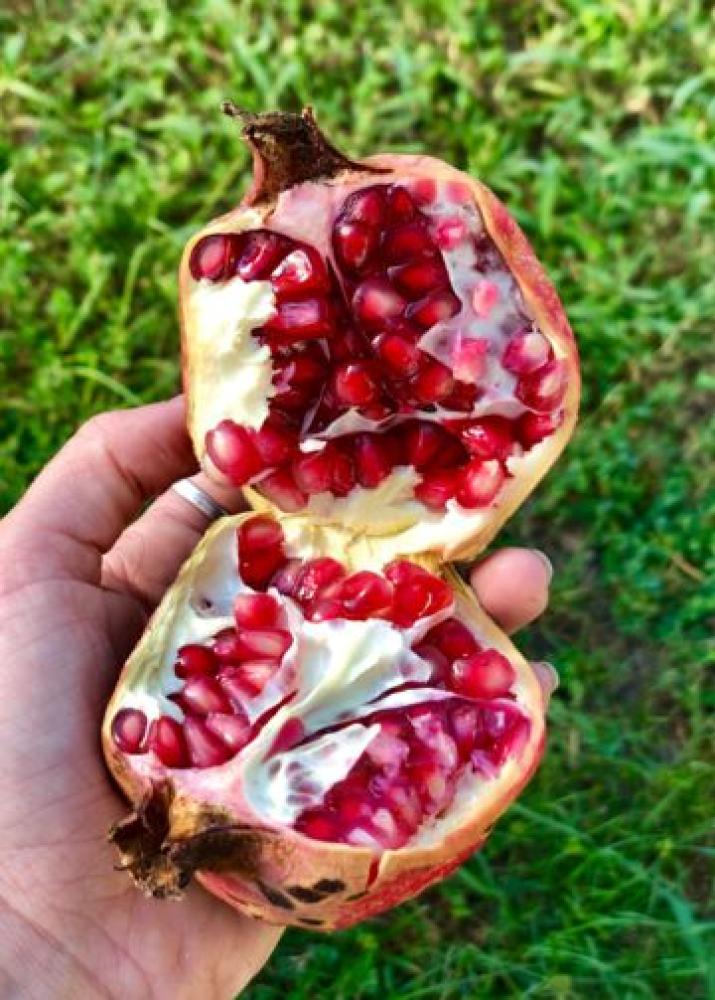
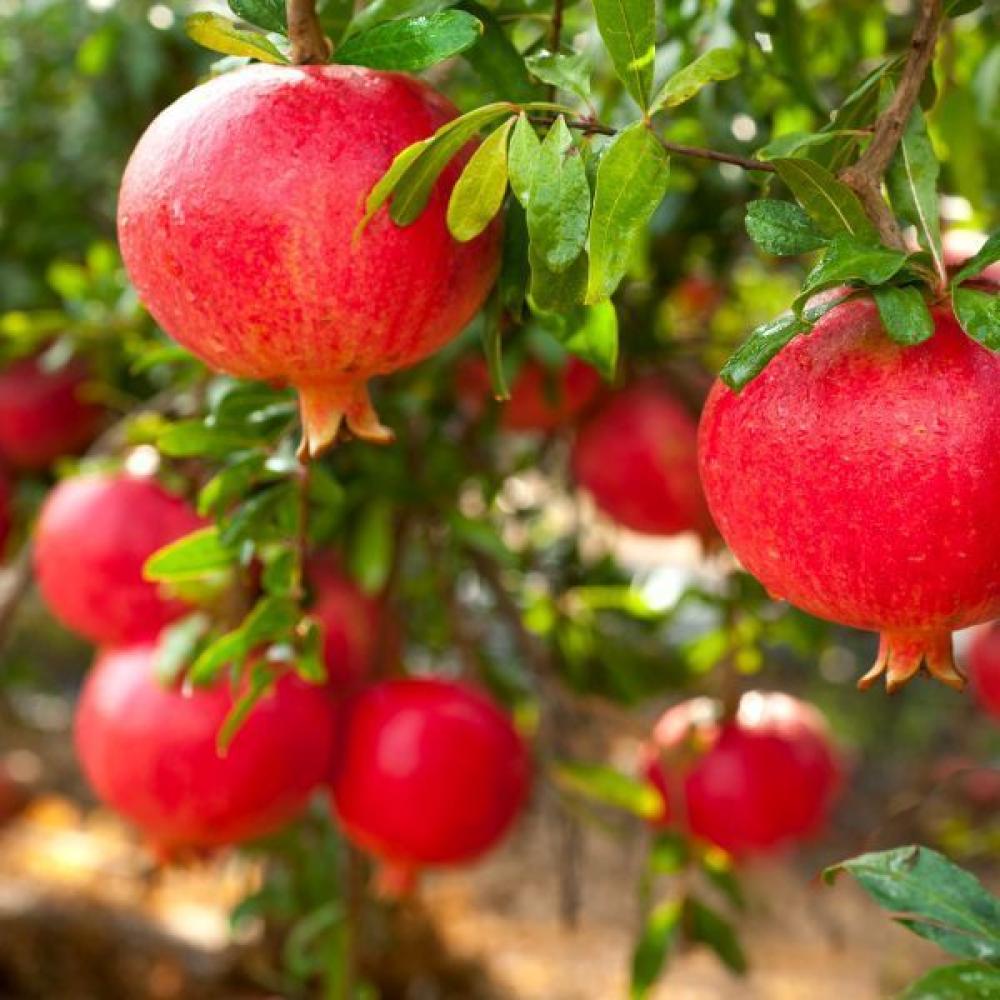
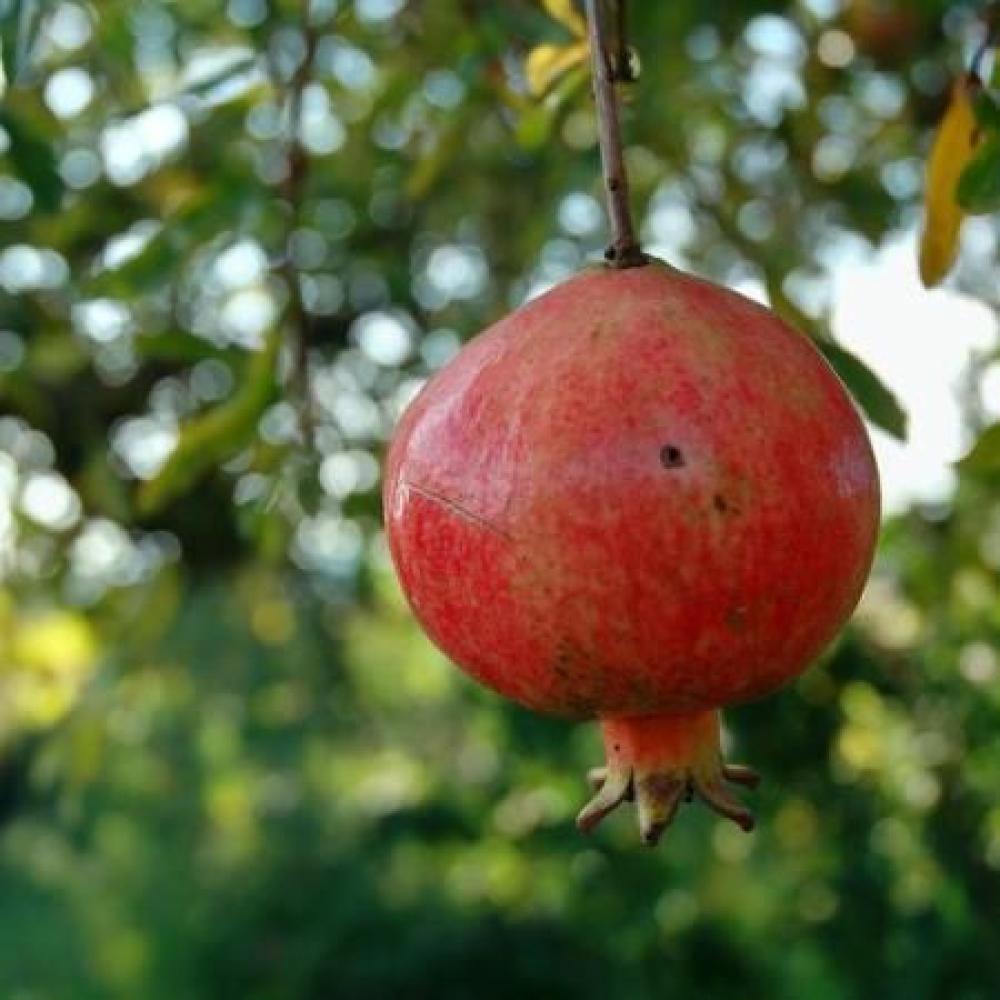
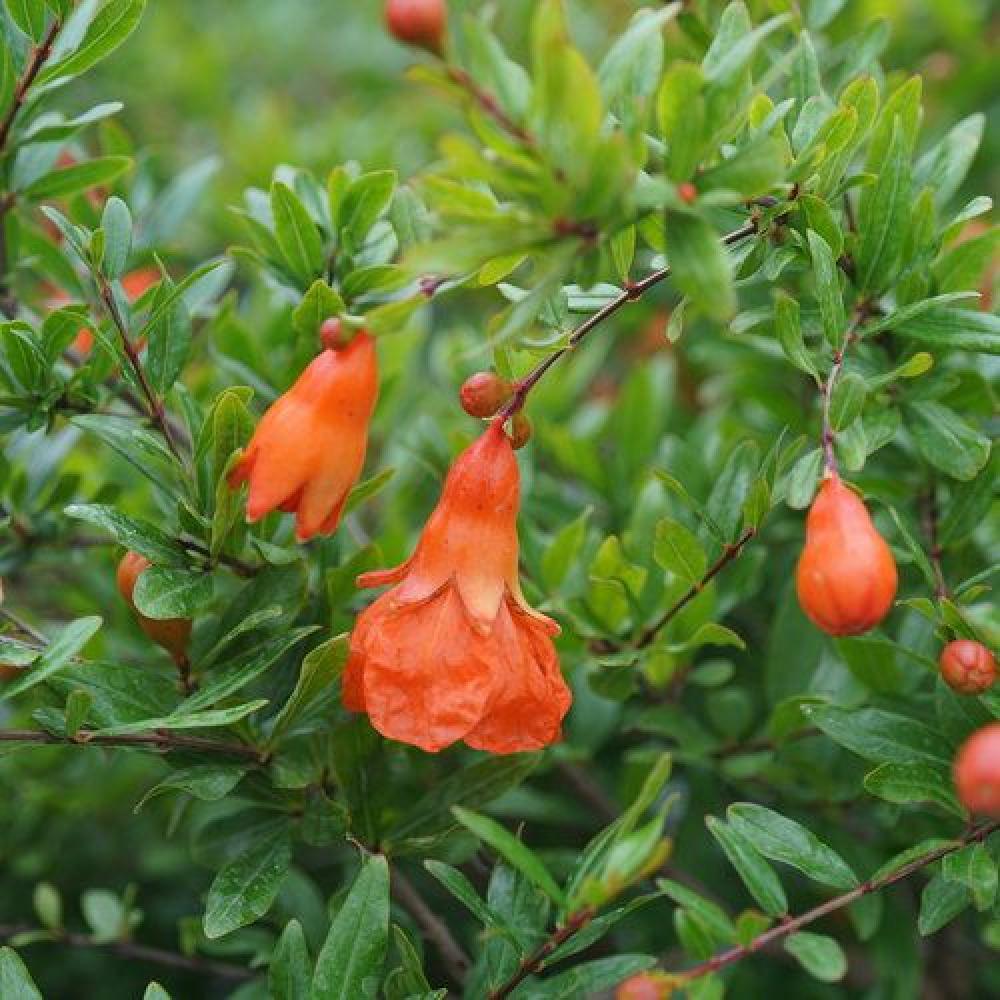
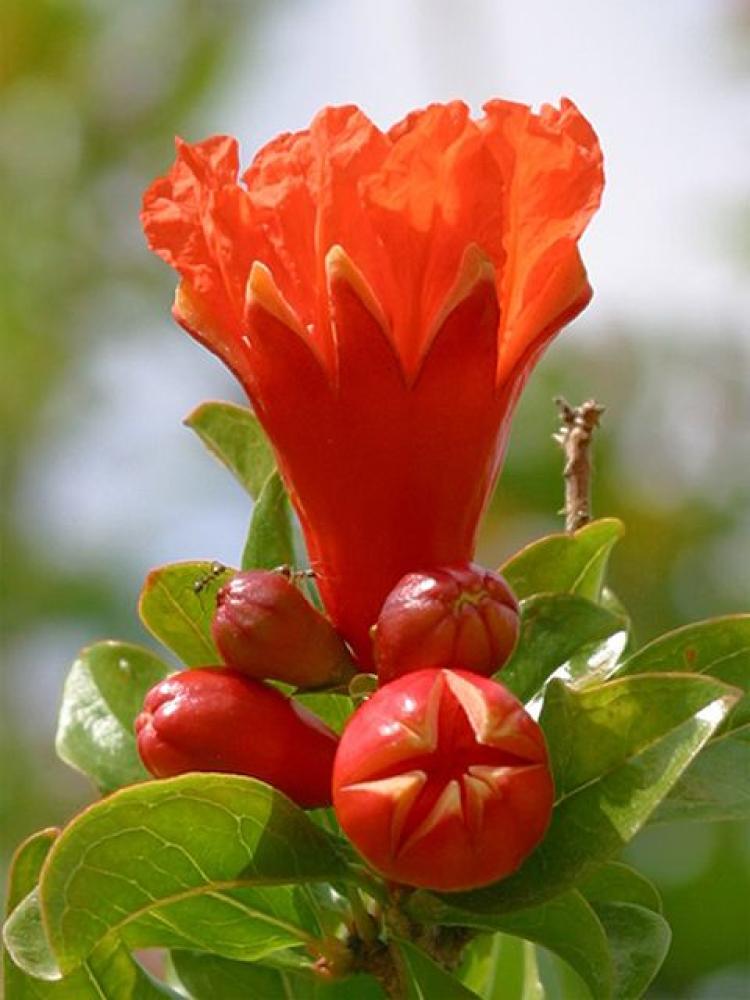
Pomegranate sectarian granatum Punica Yemeni fruit pearl, the sectarian pomegranate is characterized by its delicious taste. The color of its shell from the outside is light green, and the fruits from the inside are light red, crumbly when eaten, and this is what distinguishes it. Its flower is red-orange. It has been cultivated in several regions in Saudi Arabia, hot and cold, and succeeded without any problems.
Properties of sectarian pomegranate – granatum Punica
Scientific name: L granatum Punica
Original habitat: Iran
Family: Pomegranate
Type: a type of Yemeni pomegranate
Height: about 2-6 meters
Fruits: crumbly when eaten, large size like an orange
Proposed use: research indicates that juice extracted from pomegranate contains many components that work to boost immunity and prevent cancer due to its antioxidant and antiviral properties. It is a good source of vitamins, especially vitamins A, C, E, as well as folic acid, according to a number of reliable medical sources.
Pomegranate is used as a treatment for diarrhea, and white pomegranate peel powder can be used to treat diarrhea, as it improves stomach and intestinal function, and also enhances the growth of beneficial bacteria in the intestines.
Pomegranate seed oil contains punicic acid, which makes hair strong, thick, and healthy.
Leaves: shed in an elongated manner.
Pomegranate cultivation conditions:
Soil: The best types of soil are heavy clay, but it can tolerate a wide range of soil conditions and can grow even in clay or sandy soil. The optimal pH level for pomegranate trees is between 5.5 and 6.5.
Irrigation: It is sufficient to water pomegranate trees every 7-10 days once with a depth of 2.5 cm of water, waiting until the top layer of soil dries before watering again, with an emphasis on regular watering during the flowering and fruiting season.
Planting location: Choose a place that receives sunlight, select well-drained soil, and a warm place away from strong winds to prevent damage. It is preferable to plant pomegranates in a warm area, away from strong winds, and in the middle of the garden rather than on the sides.
Climatic conditions: It grows well in moderate areas where warmth is available, and trees need a somewhat cold winter, with a long growing season with suitable temperatures, especially during fruit ripening.
Trees need to exit the dormancy phase with a slight chill, and the tree can tolerate low winter temperatures below zero without damage, as well as somewhat high temperatures.
It is preferred to plant pomegranate trees in spring or early autumn, avoiding planting seedlings during storms, heavy rain, strong winds, winter cold, or extreme summer heat.
Exposure: Choose a place exposed to sunlight, as pomegranate trees love sunlight with the sun remaining fixed in the same spot all day and minimal shade during the day. Shade exposure affects flowering and fruit production.
Care of sectarian pomegranate trees:
Pomegranate tolerates drought but will produce better fruit if watered in dry conditions every 5-7 days. Moist soil or excessive watering are enemies to it and cause pomegranate flowers and fruits to fall.
Pruning is necessary to shape and maintain the desired form of the pomegranate tree, as well as to stimulate flowering and fruiting. It is best to do this after the danger of frost has passed.
Clean the area around the trees by removing plants and weeds, and also apply wood mulch to fight weeds and maintain soil moisture.
Fertilize once after planting using sulfate and ammonium fertilizers; repeat three times during the growing months of February, May, and September.
Read more
Purchased
11 times
Description
Pomegranate sectarian granatum Punica Yemeni fruit pearl, the sectarian pomegranate is characterized by its delicious taste. The color of its shell from the outside is light green, and the fruits from the inside are light red, crumbly when eaten, and this is what distinguishes it. Its flower is red-orange. It has been cultivated in several regions in Saudi Arabia, hot and cold, and succeeded without any problems.
Properties of sectarian pomegranate – granatum Punica
Scientific name: L granatum Punica
Original habitat: Iran
Family: Pomegranate
Type: a type of Yemeni pomegranate
Height: about 2-6 meters
Fruits: crumbly when eaten, large size like an orange
Proposed use: research indicates that juice extracted from pomegranate contains many components that work to boost immunity and prevent cancer due to its antioxidant and antiviral properties. It is a good source of vitamins, especially vitamins A, C, E, as well as folic acid, according to a number of reliable medical sources.
Pomegranate is used as a treatment for diarrhea, and white pomegranate peel powder can be used to treat diarrhea, as it improves stomach and intestinal function, and also enhances the growth of beneficial bacteria in the intestines.
Pomegranate seed oil contains punicic acid, which makes hair strong, thick, and healthy.
Leaves: shed in an elongated manner.
Pomegranate cultivation conditions:
Soil: The best types of soil are heavy clay, but it can tolerate a wide range of soil conditions and can grow even in clay or sandy soil. The optimal pH level for pomegranate trees is between 5.5 and 6.5.
Irrigation: It is sufficient to water pomegranate trees every 7-10 days once with a depth of 2.5 cm of water, waiting until the top layer of soil dries before watering again, with an emphasis on regular watering during the flowering and fruiting season.
Planting location: Choose a place that receives sunlight, select well-drained soil, and a warm place away from strong winds to prevent damage. It is preferable to plant pomegranates in a warm area, away from strong winds, and in the middle of the garden rather than on the sides.
Climatic conditions: It grows well in moderate areas where warmth is available, and trees need a somewhat cold winter, with a long growing season with suitable temperatures, especially during fruit ripening.
Trees need to exit the dormancy phase with a slight chill, and the tree can tolerate low winter temperatures below zero without damage, as well as somewhat high temperatures.
It is preferred to plant pomegranate trees in spring or early autumn, avoiding planting seedlings during storms, heavy rain, strong winds, winter cold, or extreme summer heat.
Exposure: Choose a place exposed to sunlight, as pomegranate trees love sunlight with the sun remaining fixed in the same spot all day and minimal shade during the day. Shade exposure affects flowering and fruit production.
Care of sectarian pomegranate trees:
Pomegranate tolerates drought but will produce better fruit if watered in dry conditions every 5-7 days. Moist soil or excessive watering are enemies to it and cause pomegranate flowers and fruits to fall.
Pruning is necessary to shape and maintain the desired form of the pomegranate tree, as well as to stimulate flowering and fruiting. It is best to do this after the danger of frost has passed.
Clean the area around the trees by removing plants and weeds, and also apply wood mulch to fight weeds and maintain soil moisture.
Fertilize once after planting using sulfate and ammonium fertilizers; repeat three times during the growing months of February, May, and September.
Read more