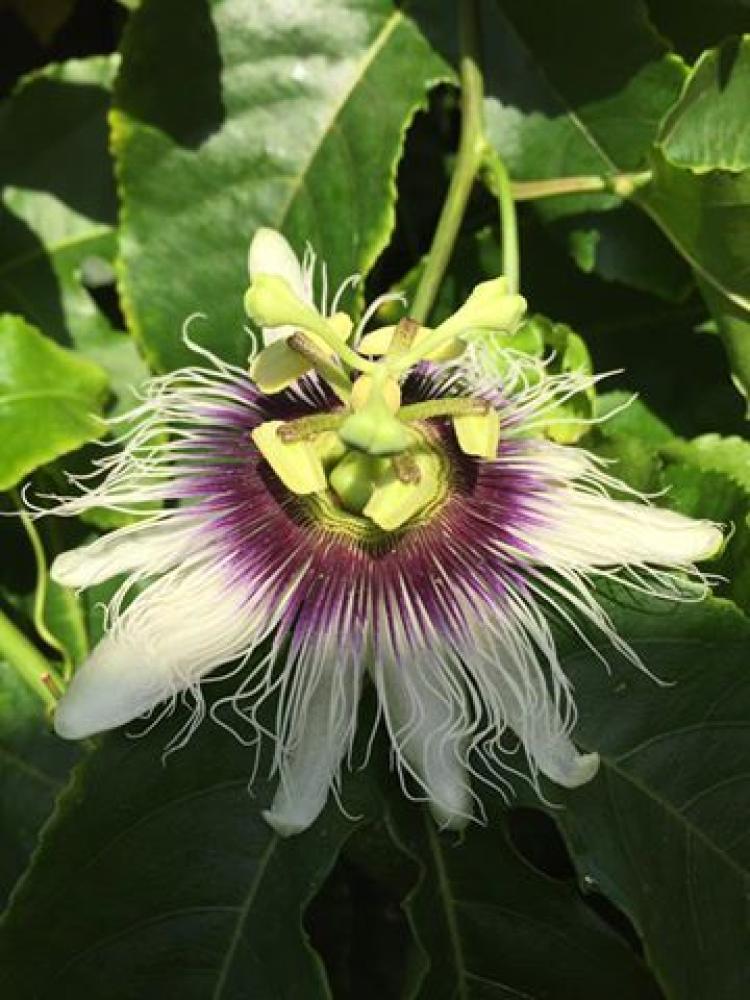
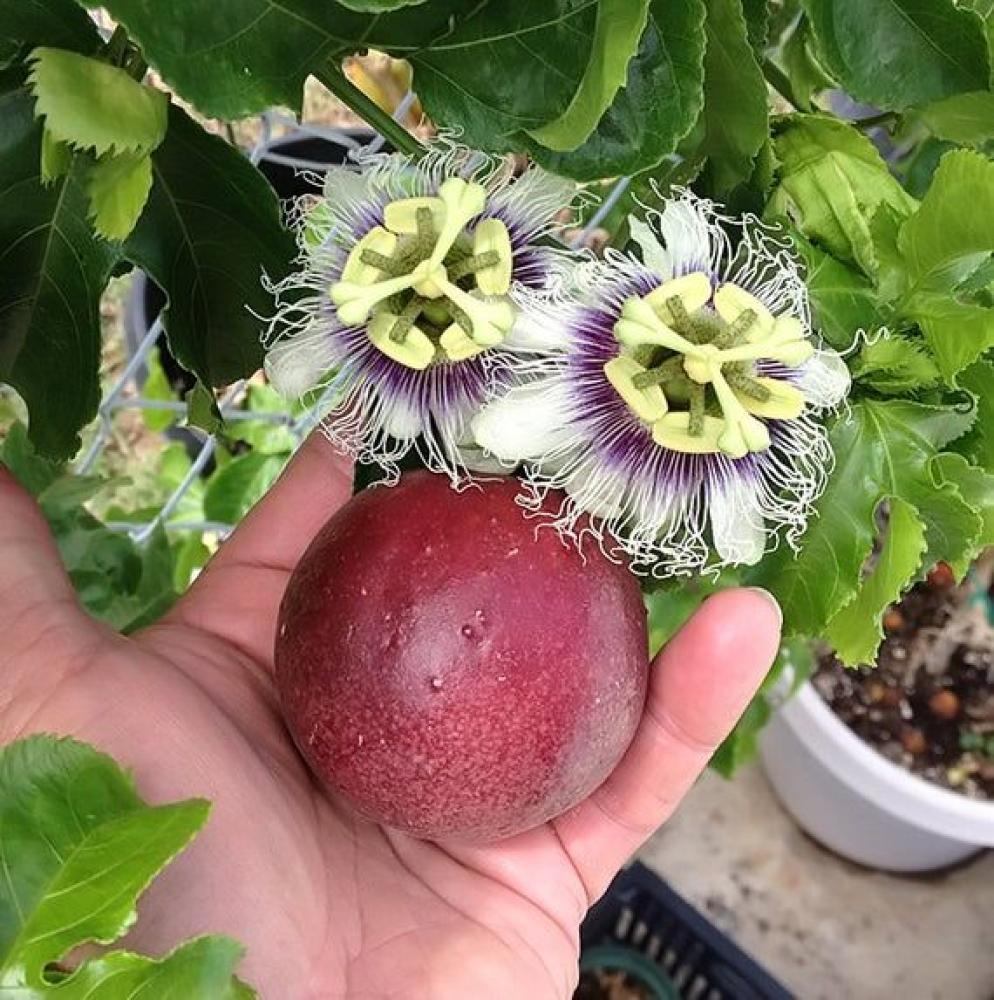
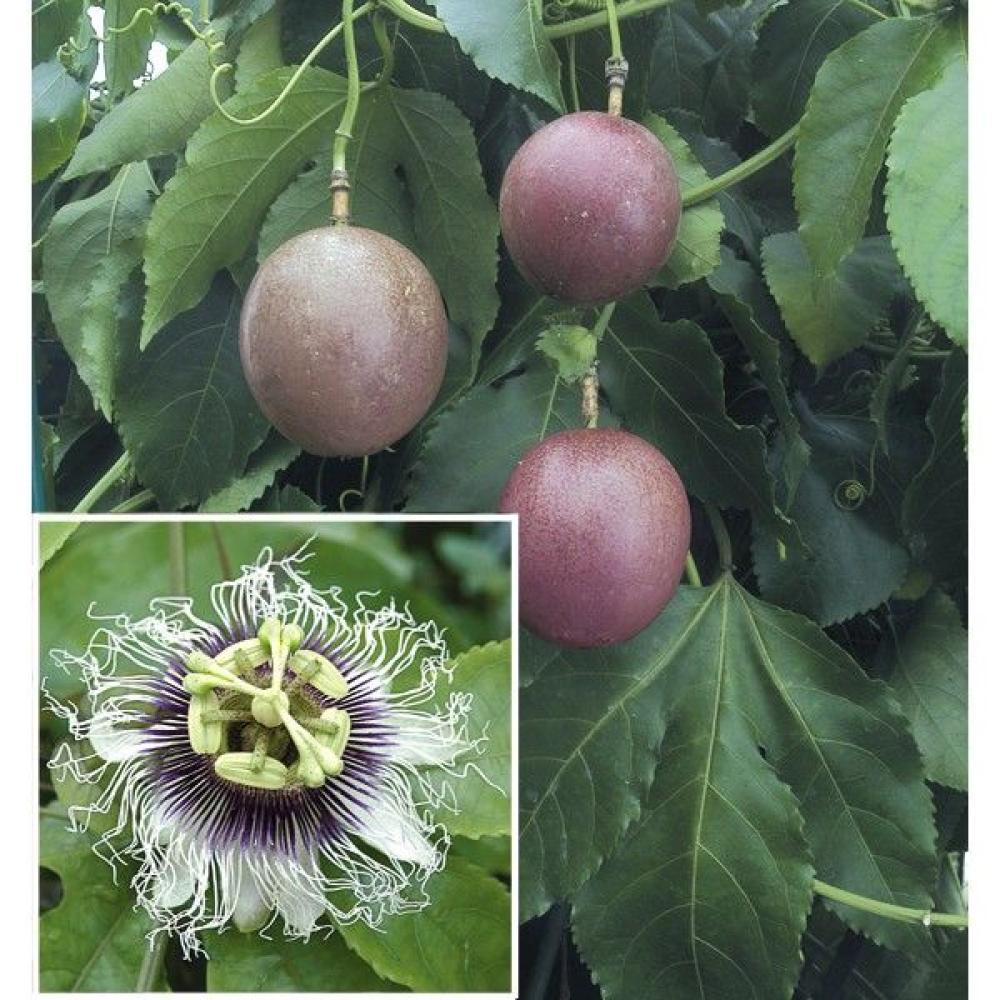
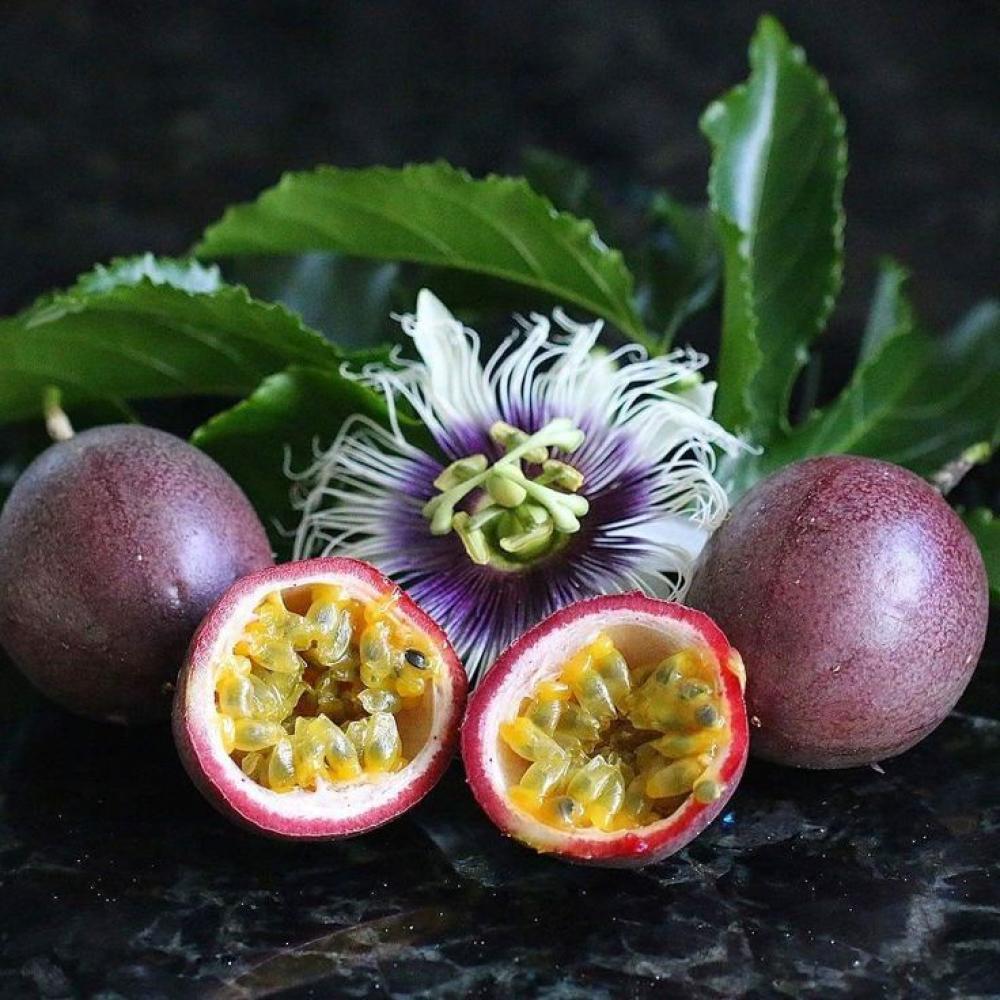
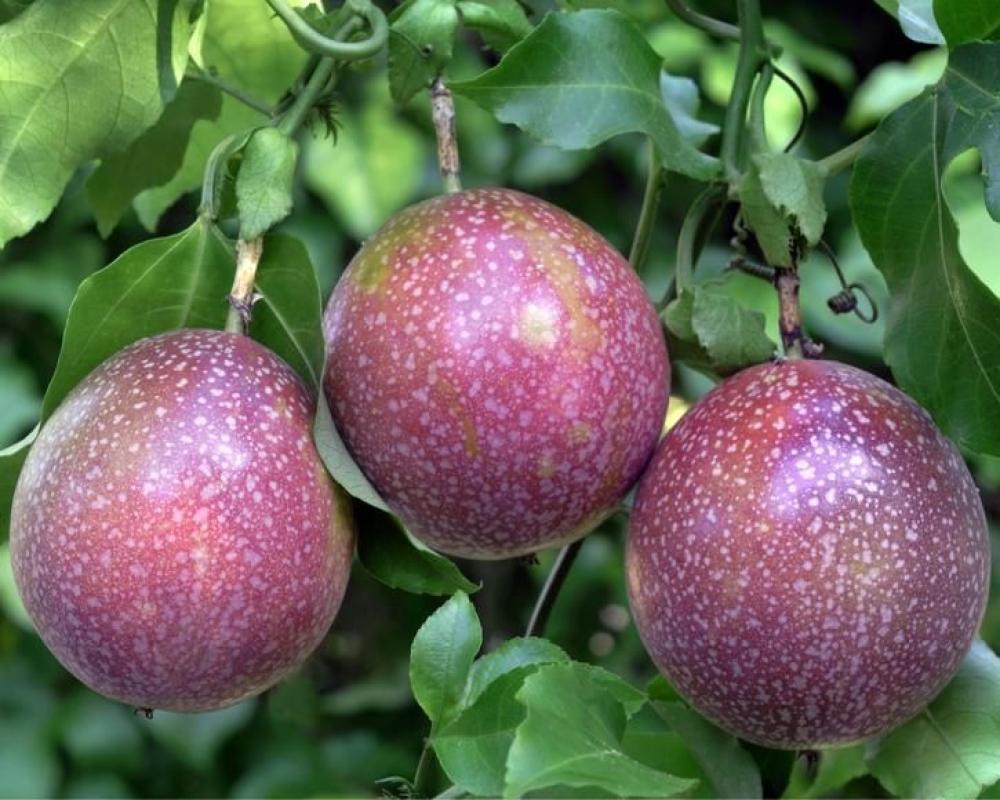
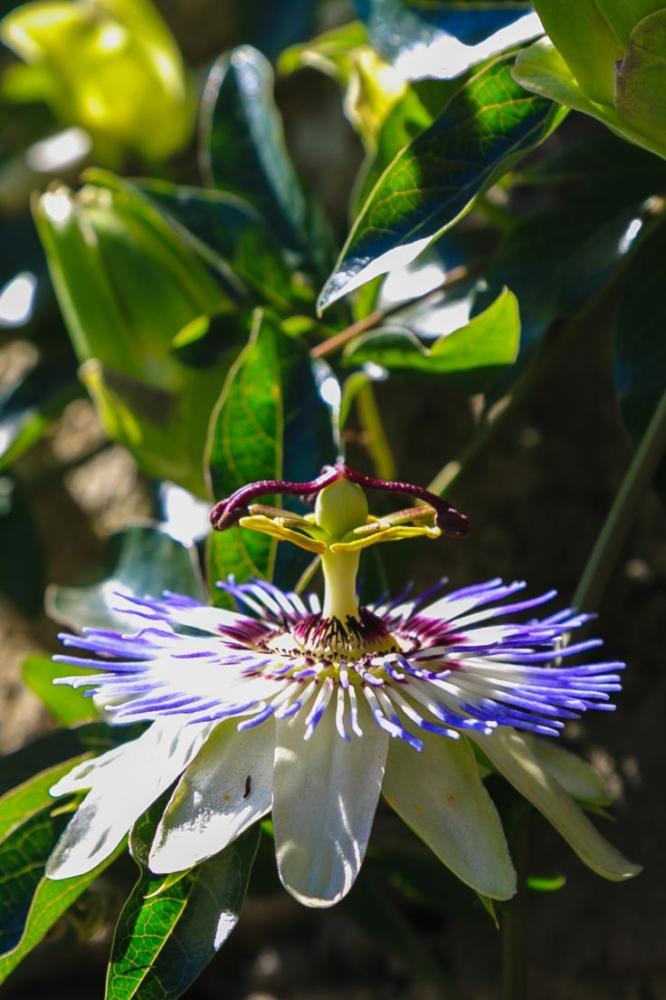
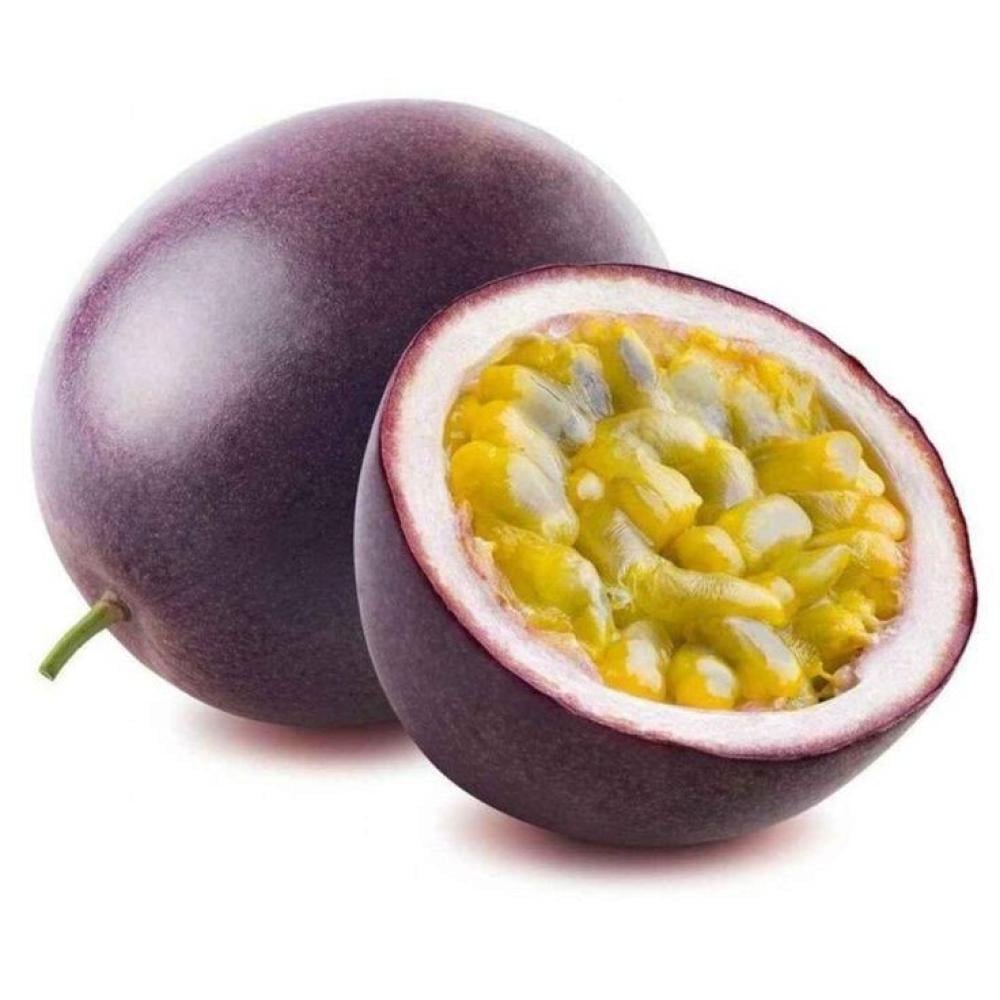
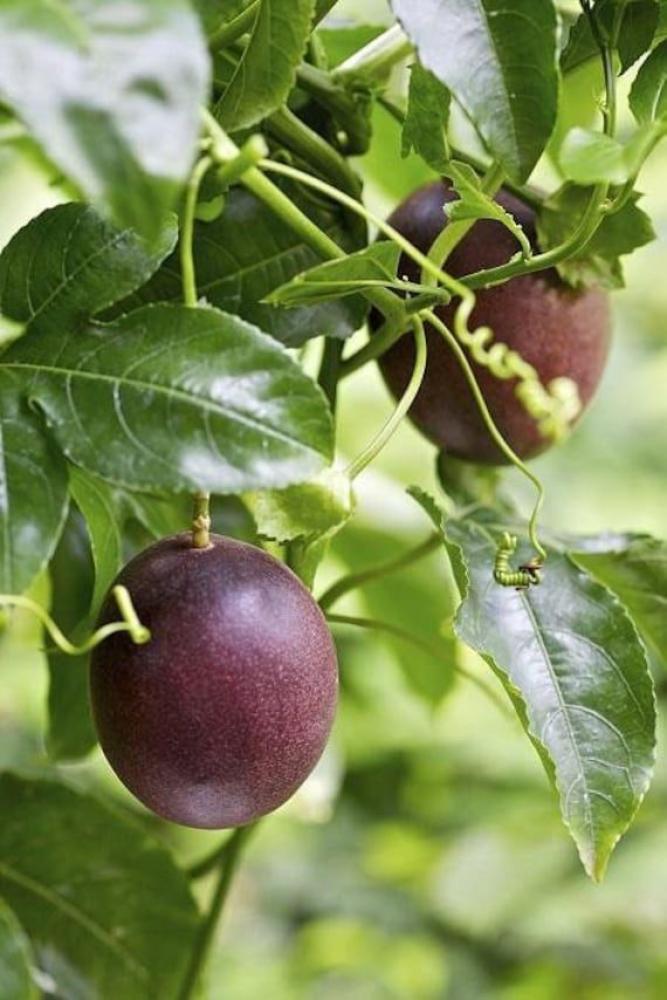
Passiflora edulis passion fruit or flower of pain tree is a strong climbing tree, it clings to a curly tendril with almost any support. It can grow very quickly under good conditions, and can reach six meters in one year. Passiflora edulis passion fruit is an evergreen climbing shrub (vine) with tendrils, and it is a woody perennial plant. The leaves are divided with three deep lobes, the leaf edge is finely serrated, about 7-20 cm long, the upper surface is shiny dark green, and the underside is dusty green. The flowers are complete (bisexual), large white, with a fragrant smell, about 7-10 cm in diameter. The flower's pistil contains a single carpel with three ovules attached to the wall of the pistil, and the pollen is large, sticky. The flower consists of 5 sepals and 5 petals forming the calyx tube. Some varieties are self-sterile, so planting more than one variety in the orchard is necessary to ensure good pollination by insects. The fruits are round or oval, yellow or crimson, juicy flesh containing small seeds that are dark brown or black. The size of the fruits varies between 6-8 cm in diameter and about 7-9 cm in length. It takes about 60-90 days for the fruit to fully develop. The fruits grow in a sinusoidal curve during maturation. They can be stored for a month at 7°C and 85-90% humidity.
Characteristics of the passion fruit tree:
Scientific name: Passiflora edulis
Original habitat: Brazil, Paraguay, and northern Argentina
Common name: Passion fruit, flower of pain
Family: Passifloraceae
Type: Edulis
Height: 6 meters
Fruits: round or oval, yellow or crimson, juicy flesh with small dark brown or black seeds, size between 6-8 cm in diameter and 7-9 cm in length
Proposed use: Passion fruit is highly nutritious and a good source of dietary fiber, vitamin C, and vitamin A. It has many benefits and uses in the medical field.
Leaves: evergreen.
Cultivation guidelines for passion fruit tree:
Soil: Grows in loamy soils, fertile, well-drained, and ventilated soils, sandy soils.
Irrigation: Water regularly, especially in summer.
Planting location: In public and private gardens, enclosed farms, small spaces at homes, farms.
Climatic conditions:
Drought: Tolerates slightly.
Temperature: Tolerates frost: does not tolerate.
Exposure: Prefers direct sunlight for at least 6 hours a day.
Tree care:
Branches bearing fruit should be bent or cut back to the trunk to stimulate growth for the next season.
Prune branches every three to four years to maintain productivity.
Some trees bear many medium-sized fruits, which are usually removed to allow other trees to develop better until maturity.
Fertilize the trees with appropriate chemical fertilizers, considering the fertilizer ratio needed by the tree.
Read more
Purchased
59 times
Description
Passiflora edulis passion fruit or flower of pain tree is a strong climbing tree, it clings to a curly tendril with almost any support. It can grow very quickly under good conditions, and can reach six meters in one year. Passiflora edulis passion fruit is an evergreen climbing shrub (vine) with tendrils, and it is a woody perennial plant. The leaves are divided with three deep lobes, the leaf edge is finely serrated, about 7-20 cm long, the upper surface is shiny dark green, and the underside is dusty green. The flowers are complete (bisexual), large white, with a fragrant smell, about 7-10 cm in diameter. The flower's pistil contains a single carpel with three ovules attached to the wall of the pistil, and the pollen is large, sticky. The flower consists of 5 sepals and 5 petals forming the calyx tube. Some varieties are self-sterile, so planting more than one variety in the orchard is necessary to ensure good pollination by insects. The fruits are round or oval, yellow or crimson, juicy flesh containing small seeds that are dark brown or black. The size of the fruits varies between 6-8 cm in diameter and about 7-9 cm in length. It takes about 60-90 days for the fruit to fully develop. The fruits grow in a sinusoidal curve during maturation. They can be stored for a month at 7°C and 85-90% humidity.
Characteristics of the passion fruit tree:
Scientific name: Passiflora edulis
Original habitat: Brazil, Paraguay, and northern Argentina
Common name: Passion fruit, flower of pain
Family: Passifloraceae
Type: Edulis
Height: 6 meters
Fruits: round or oval, yellow or crimson, juicy flesh with small dark brown or black seeds, size between 6-8 cm in diameter and 7-9 cm in length
Proposed use: Passion fruit is highly nutritious and a good source of dietary fiber, vitamin C, and vitamin A. It has many benefits and uses in the medical field.
Leaves: evergreen.
Cultivation guidelines for passion fruit tree:
Soil: Grows in loamy soils, fertile, well-drained, and ventilated soils, sandy soils.
Irrigation: Water regularly, especially in summer.
Planting location: In public and private gardens, enclosed farms, small spaces at homes, farms.
Climatic conditions:
Drought: Tolerates slightly.
Temperature: Tolerates frost: does not tolerate.
Exposure: Prefers direct sunlight for at least 6 hours a day.
Tree care:
Branches bearing fruit should be bent or cut back to the trunk to stimulate growth for the next season.
Prune branches every three to four years to maintain productivity.
Some trees bear many medium-sized fruits, which are usually removed to allow other trees to develop better until maturity.
Fertilize the trees with appropriate chemical fertilizers, considering the fertilizer ratio needed by the tree.
Read more