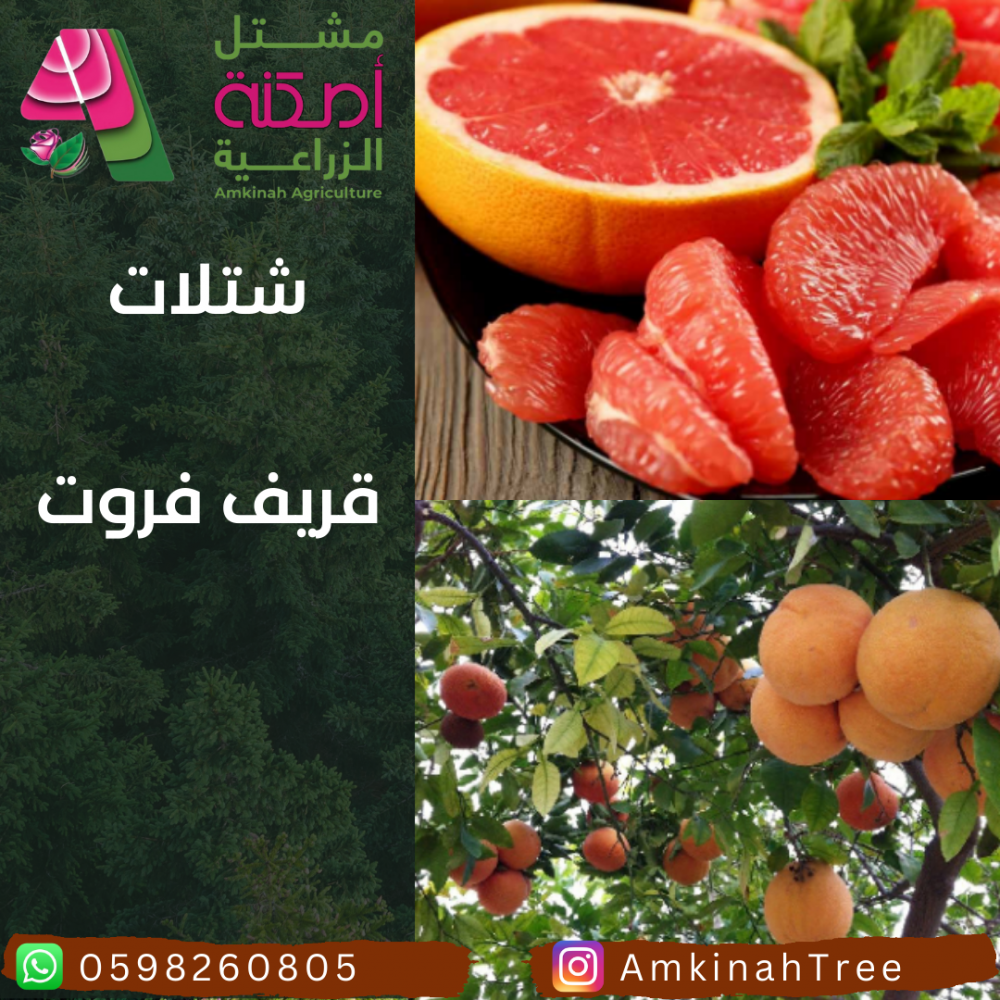
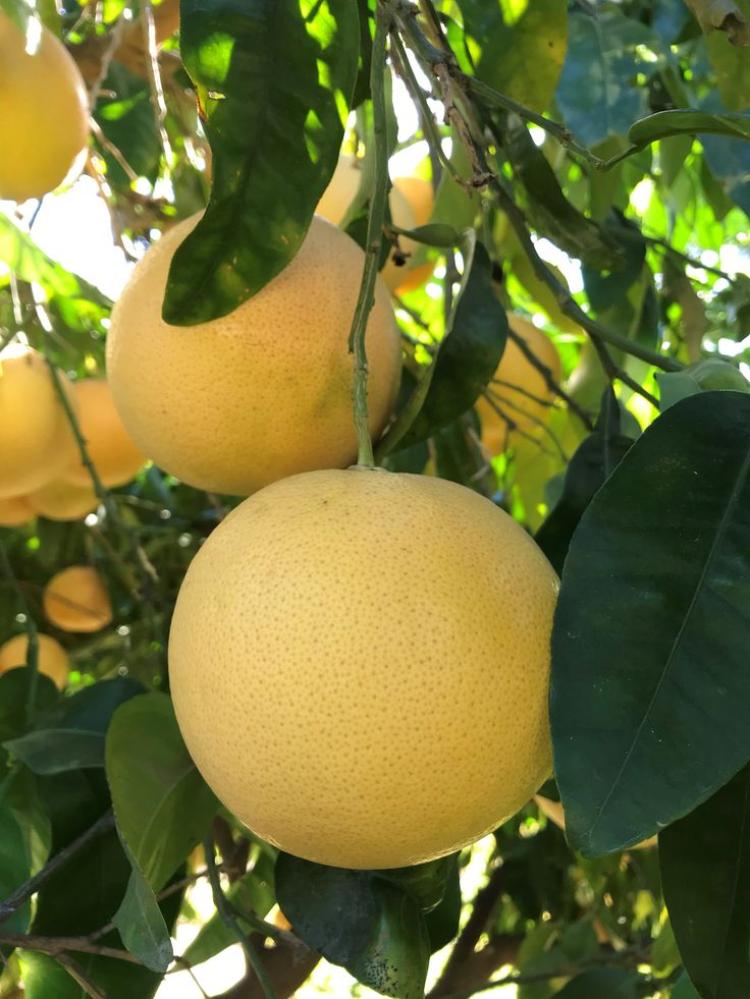
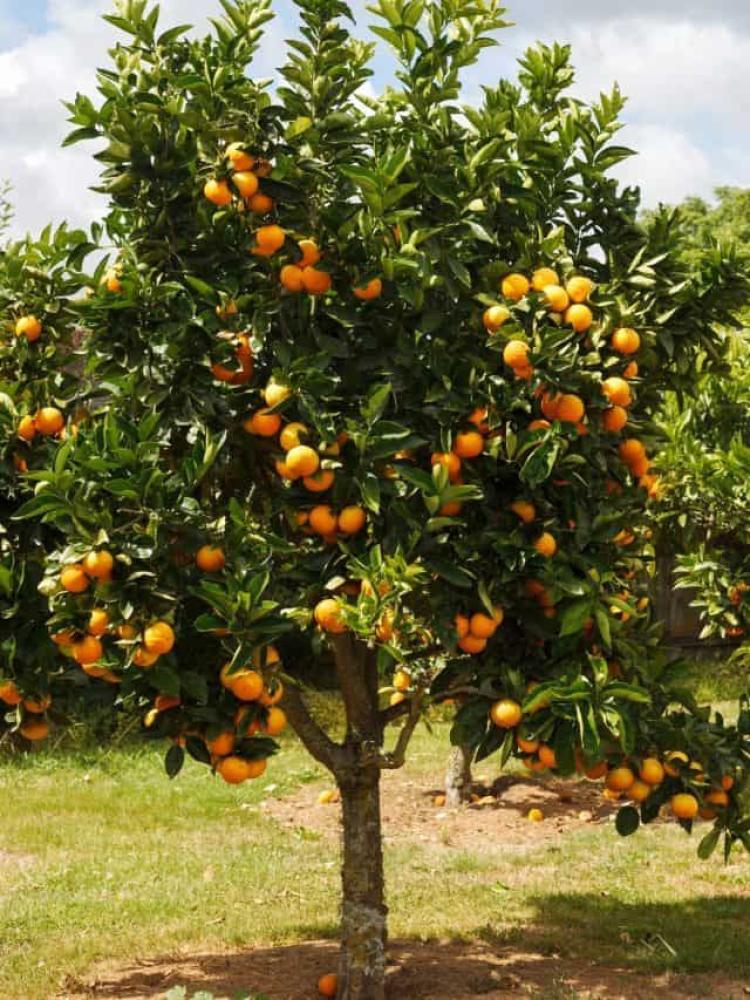
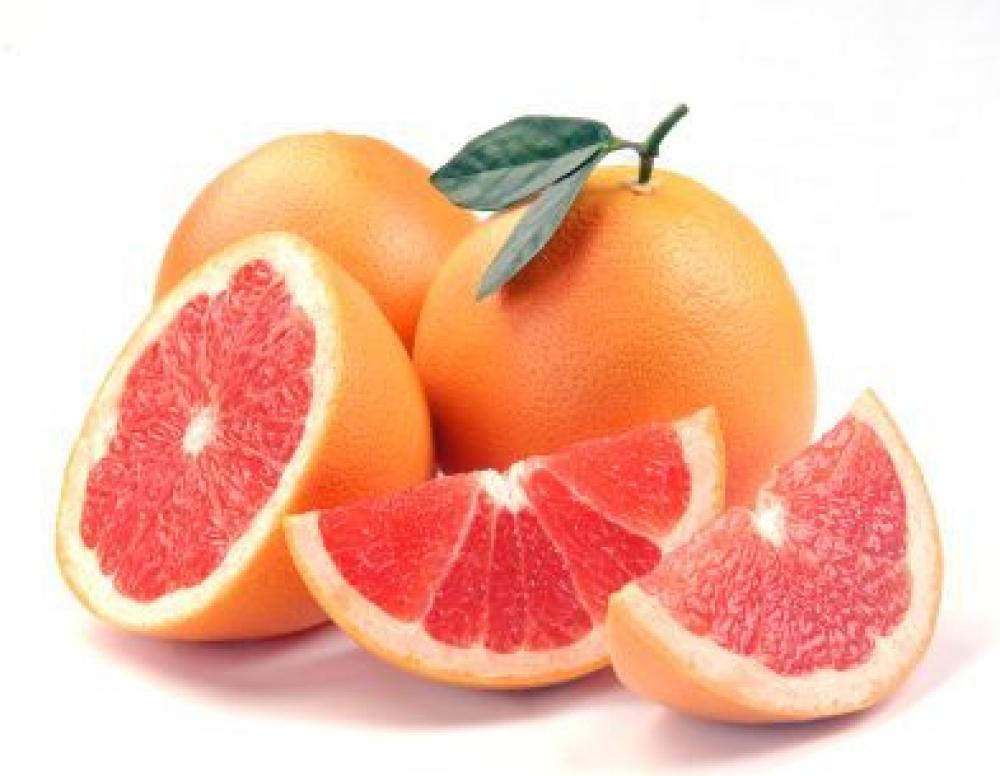
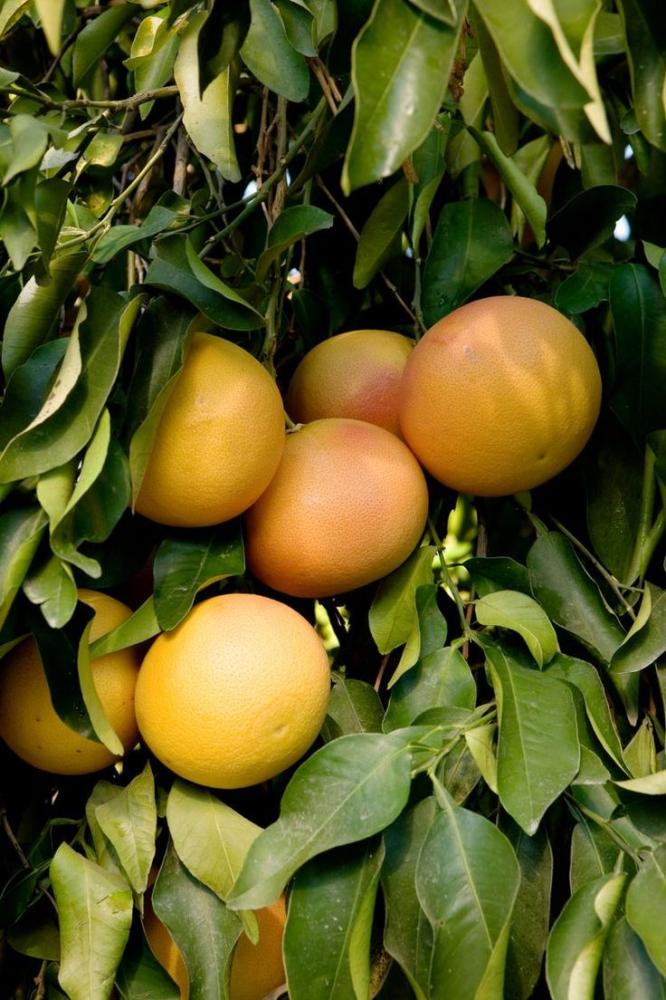
Grapefruit Citrus paradisi The description of the tree, so it is impossible for the grapefruit fruit to result from hybridization of pomelo with orange, as the tree bears many fruits on it in clusters, noting that the weight of one fruit ranges between 0.45-2.2 kg, and the fruit is characterized by its rough and thick peel, and it is segmented inside like an orange. The color varies depending on the variety, some are white, or pink with red pulp, and the seeds also vary, as each fruit contains about fifty white, oval-shaped seeds. The nutritional value of it The grapefruit contains many important nutrients necessary for the health and safety of the body, such as vitamins like vitamin C, A, and B in its various types like vitamin B9, E, and K, in addition to antioxidants such as flavonoids, and various acids like citric acid which gives it the sour taste. It also contains minerals such as phosphorus, calcium, and potassium, as well as natural sugars, and the substances beta-carotene and lycopene. Suitable conditions Since grapefruit trees are acidic trees, the suitable conditions for their growth are similar to the cultivation of lemon and orange on agricultural land. The grapefruit tree can survive in high and cold temperatures, so it is cultivated in all areas but is more common in the valleys and Shafa Ghor areas. Suitable soil for cultivation The cultivation of grapefruit succeeds in heavy, medium, and sandy soils, provided they are deep, well-drained, and have good aeration and water permeability. Soil acidity affects the growth and success of the tree, and the appropriate acidity is from 5.5 to 7, and it can be cultivated up to a pH of 8.5. Increasing soil salinity also has a significant impact on growth: it reduces tree growth and decreases the yield. Water needs Since grapefruit trees are evergreen, they need a continuous and regular water source. Regardless of the water source, it must be free of harmful salts, especially sodium chloride salts, which should not exceed 0.5 mg/l, magnesium oxide salts should not exceed 0.5 mg/l, and boron salts should not exceed 0.25 mg/l. Avoid excessive watering during flowering to prevent flower drop, and be cautious with light, quick, and close watering during flowering and fruit setting until the fruit reaches the size of a chickpea.
Read more
Description
Grapefruit Citrus paradisi The description of the tree, so it is impossible for the grapefruit fruit to result from hybridization of pomelo with orange, as the tree bears many fruits on it in clusters, noting that the weight of one fruit ranges between 0.45-2.2 kg, and the fruit is characterized by its rough and thick peel, and it is segmented inside like an orange. The color varies depending on the variety, some are white, or pink with red pulp, and the seeds also vary, as each fruit contains about fifty white, oval-shaped seeds. The nutritional value of it The grapefruit contains many important nutrients necessary for the health and safety of the body, such as vitamins like vitamin C, A, and B in its various types like vitamin B9, E, and K, in addition to antioxidants such as flavonoids, and various acids like citric acid which gives it the sour taste. It also contains minerals such as phosphorus, calcium, and potassium, as well as natural sugars, and the substances beta-carotene and lycopene. Suitable conditions Since grapefruit trees are acidic trees, the suitable conditions for their growth are similar to the cultivation of lemon and orange on agricultural land. The grapefruit tree can survive in high and cold temperatures, so it is cultivated in all areas but is more common in the valleys and Shafa Ghor areas. Suitable soil for cultivation The cultivation of grapefruit succeeds in heavy, medium, and sandy soils, provided they are deep, well-drained, and have good aeration and water permeability. Soil acidity affects the growth and success of the tree, and the appropriate acidity is from 5.5 to 7, and it can be cultivated up to a pH of 8.5. Increasing soil salinity also has a significant impact on growth: it reduces tree growth and decreases the yield. Water needs Since grapefruit trees are evergreen, they need a continuous and regular water source. Regardless of the water source, it must be free of harmful salts, especially sodium chloride salts, which should not exceed 0.5 mg/l, magnesium oxide salts should not exceed 0.5 mg/l, and boron salts should not exceed 0.25 mg/l. Avoid excessive watering during flowering to prevent flower drop, and be cautious with light, quick, and close watering during flowering and fruit setting until the fruit reaches the size of a chickpea.
Read more