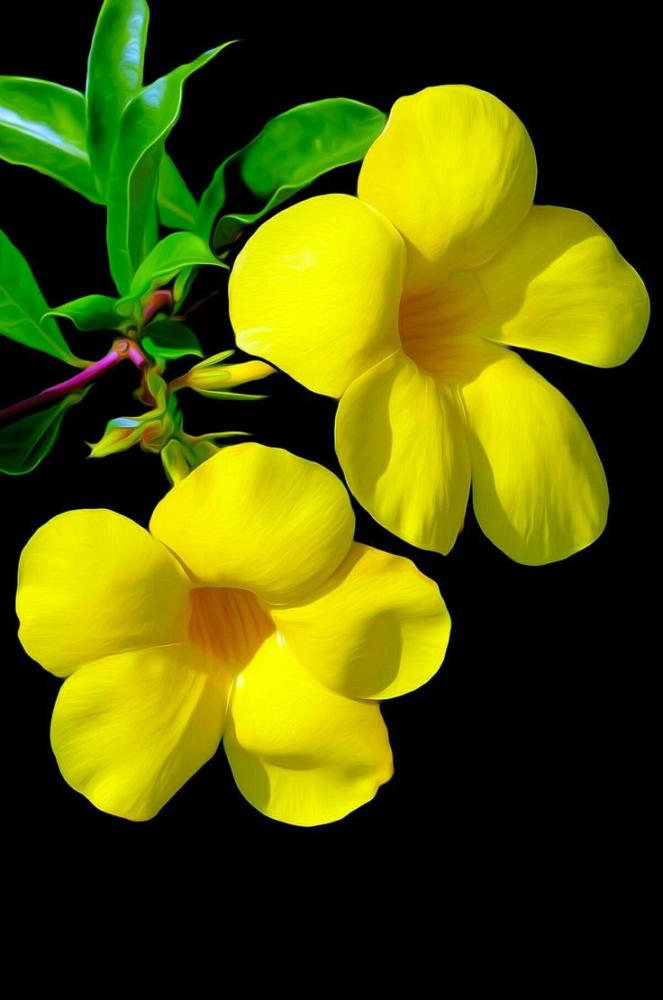
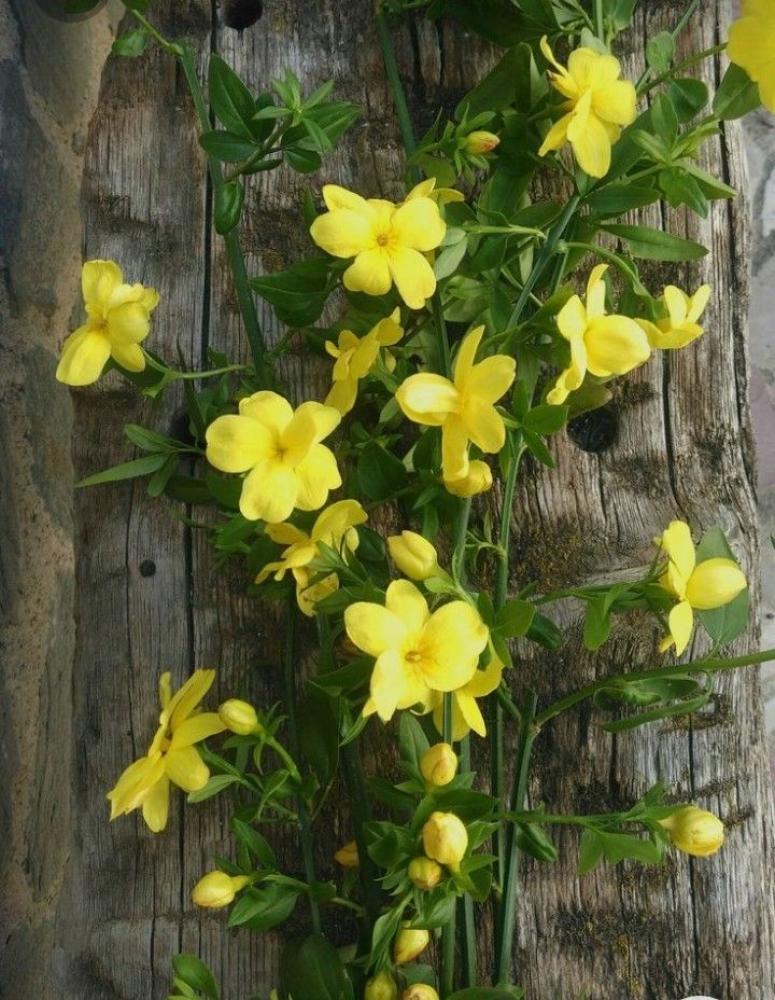
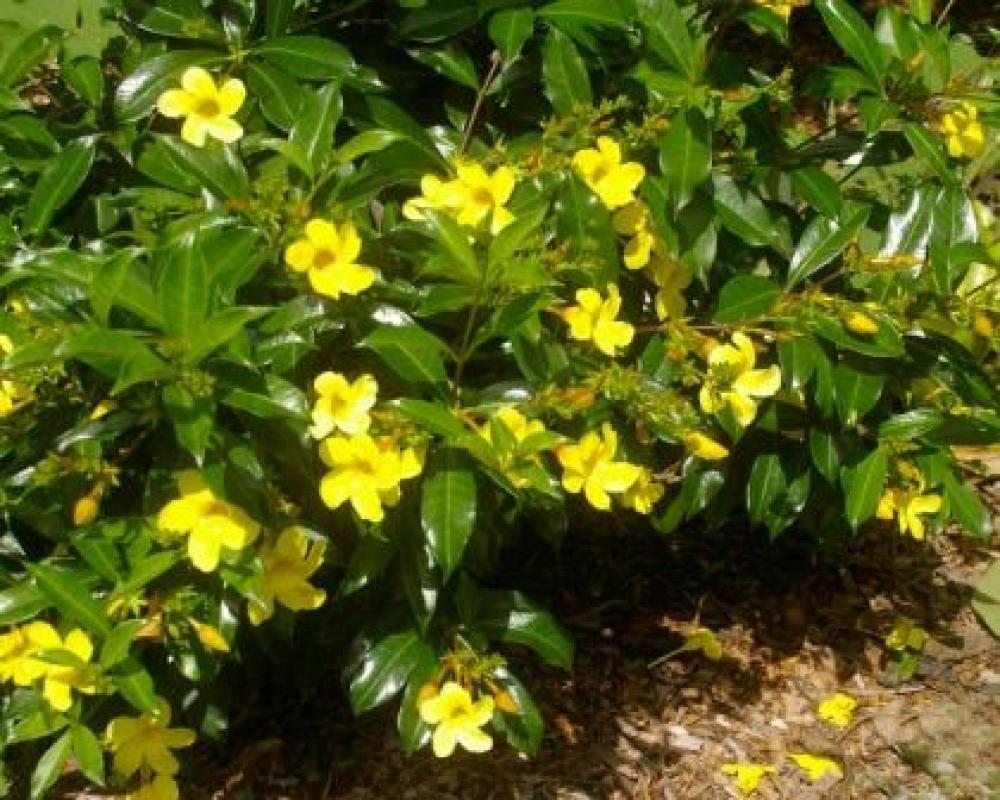
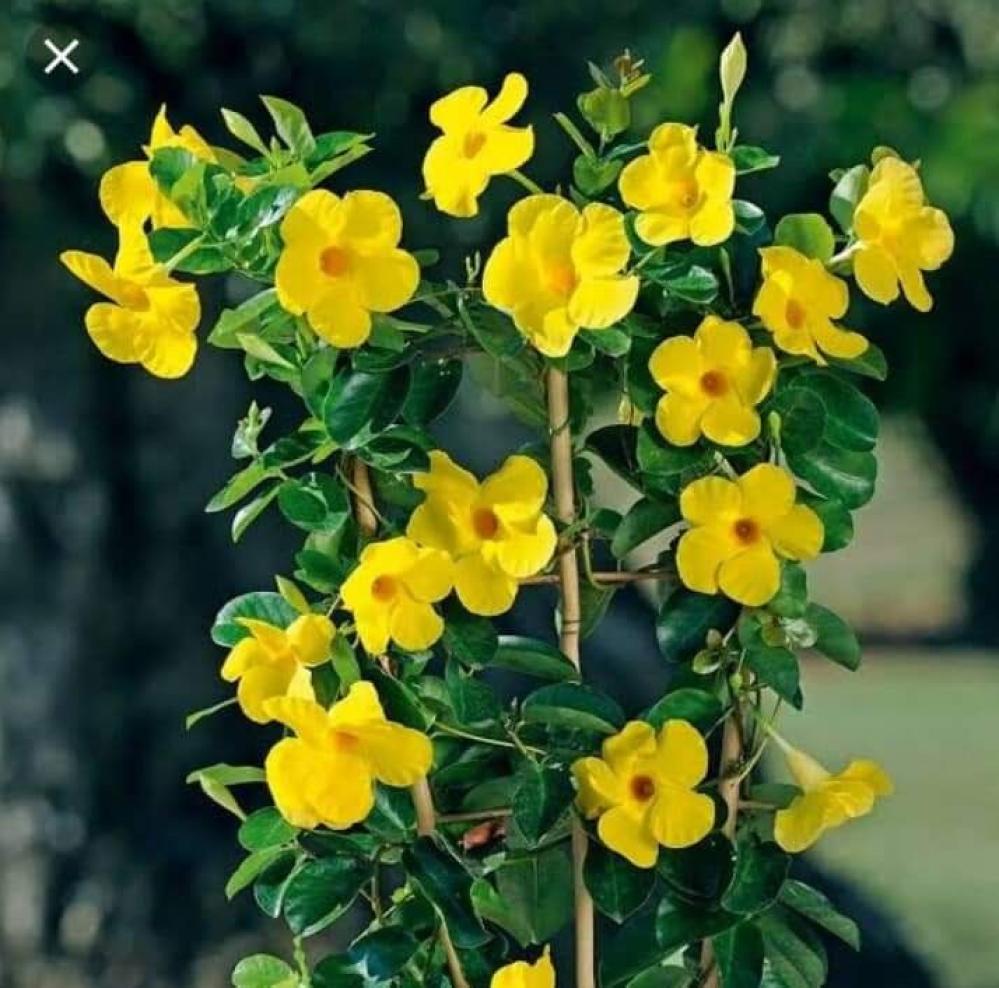
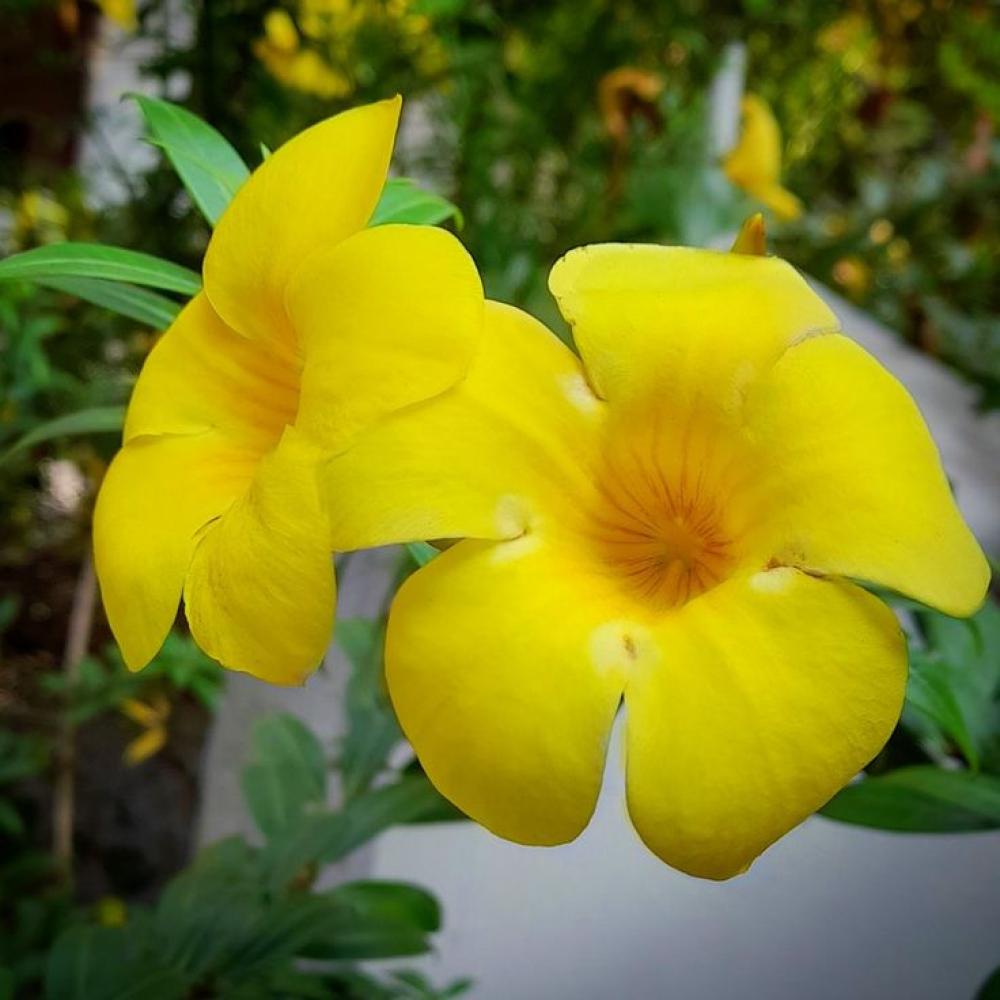
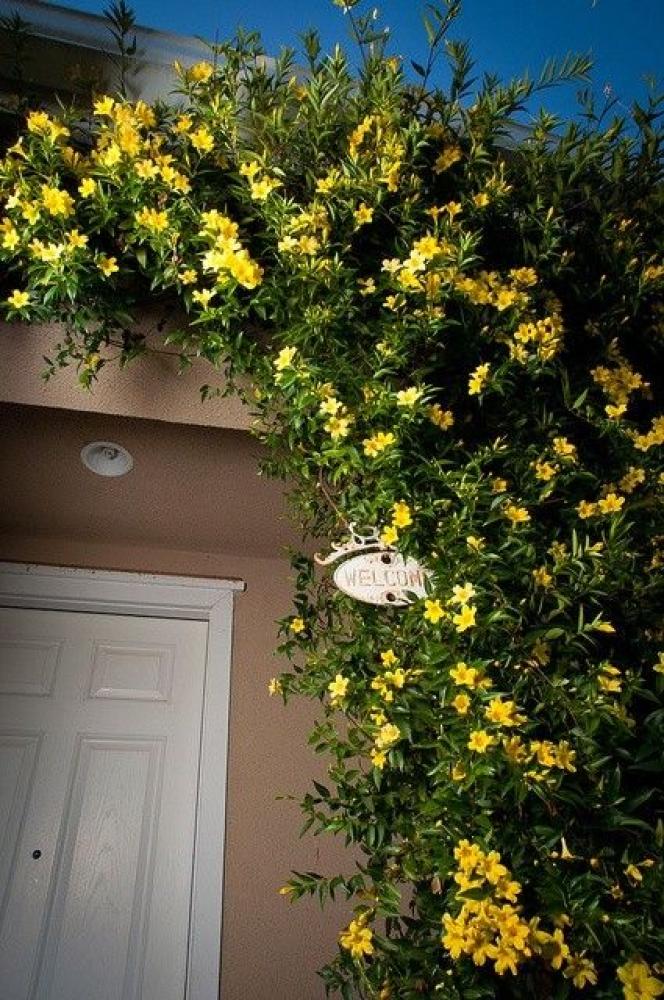
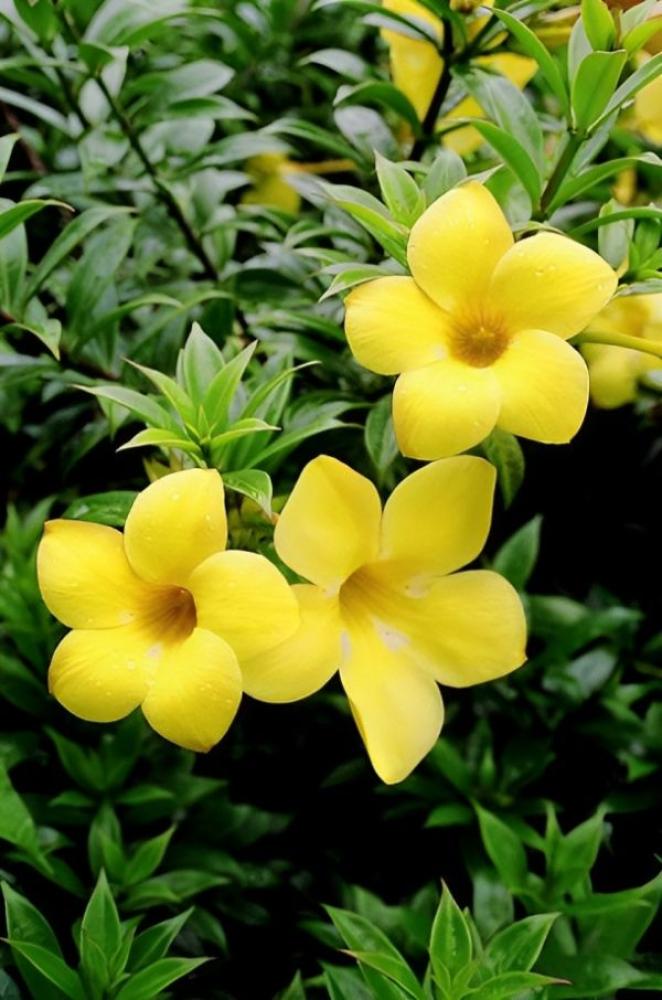
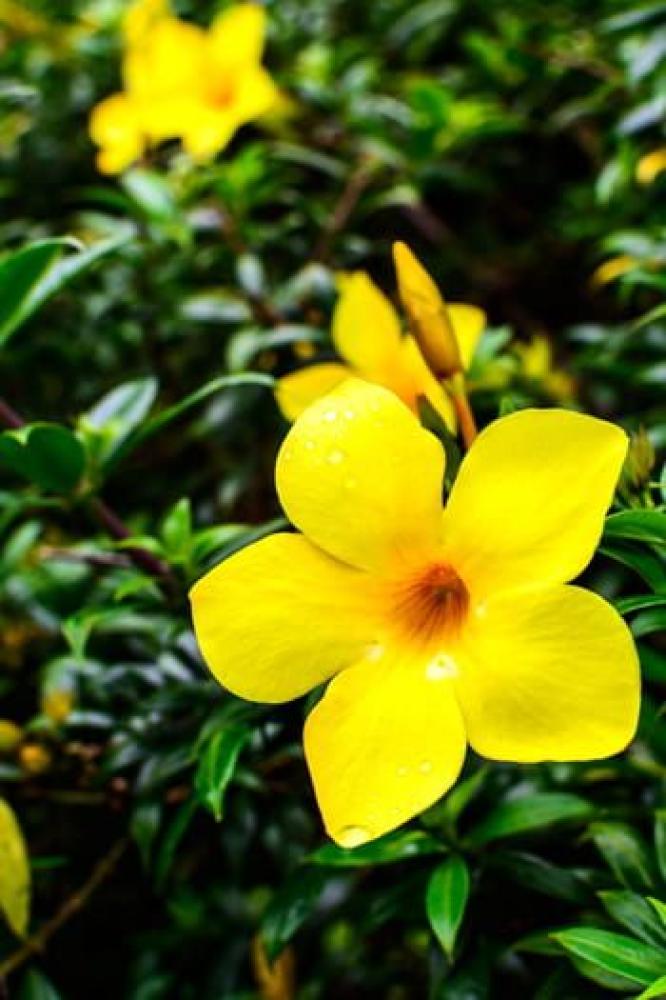
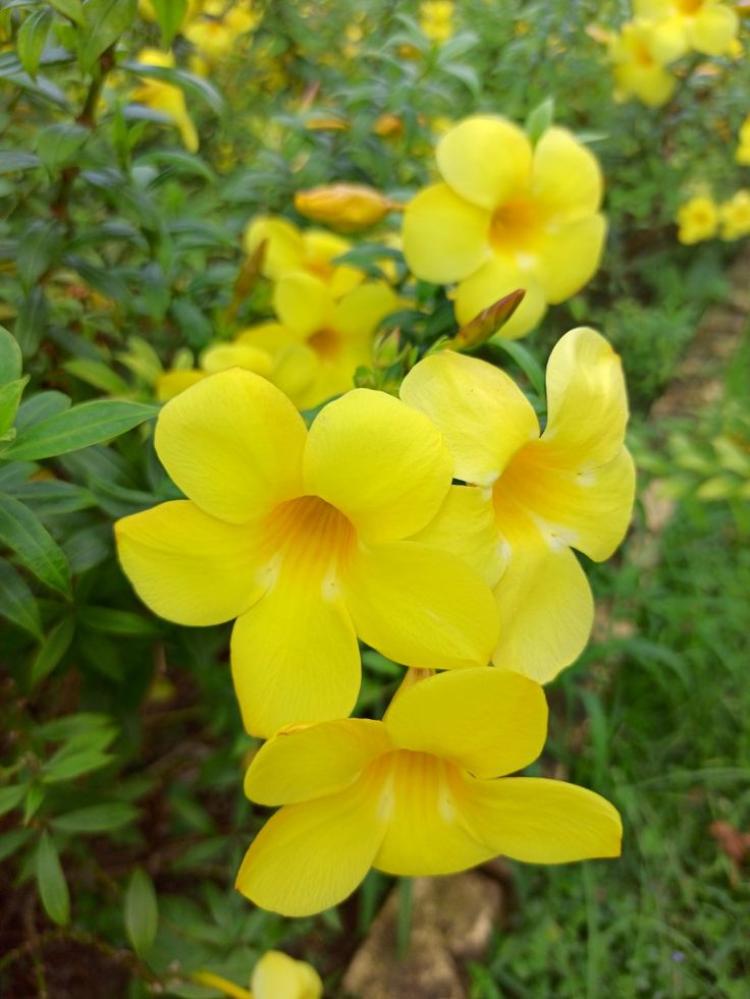
Allamanda plant or golden trumpet, considered one of the evergreen climbing plants, belongs to the Apocynaceae family, its original homeland in Brazil. These flowers are distinguished by their fragrant, sweet scent, ease of care, beautiful leaves, and large flowers, which take the shape of a trumpet in bright yellow, with a diameter of 10 to 12 cm, blooming throughout the year, especially from the beginning of July to November. They attract butterflies and hummingbirds, but are not widely spread in Arab countries. It is preferred to cultivate it on house facades as a climbing plant on walls, and it is considered a decorative plant for fences and gardens.
Characteristics of Allamanda or golden trumpet plant
Scientific name: Allamanda
Original homeland: Brazil, the Americas from Mexico to Argentina, but it is spread in many Arab countries.
Nickname: Allamanda, golden trumpet.
Family: Apocynaceae.
Type: Allamanda.
Height: 8 meters.
Suggested use: Generally cultivated for decoration in homes, gardens, roads, and also for soil coverage; it has multiple health benefits.
Leaves: Evergreen.
Propagation: Allamanda is propagated by seeds, terminal cuttings, and intermediate cuttings.
Planting instructions
Soil: All types of soil are suitable for planting Allamanda except salty soil; the plant is sensitive to salinity, which should not exceed 1000 ppm. It is preferable to plant in light, rich, well-drained, and aerated soil.
Watering: Allamanda loves moisture, and watering is done when the top surface of the soil dries out to about 2 cm.
Planting location: It is planted in wide lands, roads, as well as in homes or parks.
Climate conditions:
Drought: Tolerant.
Temperature: Tolerant of high temperatures.
Frost: Avoid frost below 5 degrees Celsius, and the plant should be covered during that period.
Exposure: Loves direct sunlight for at least 6 hours a day.
Plant care:
Pruning should be done at the end of winter to increase the density of the plant, including removing weak, damaged, stray, and old branches. It can be pruned to obtain a single-stem shrub, with continuous pruning.
It is preferable to plant it near a wall, leaving 1 meter between the plants.
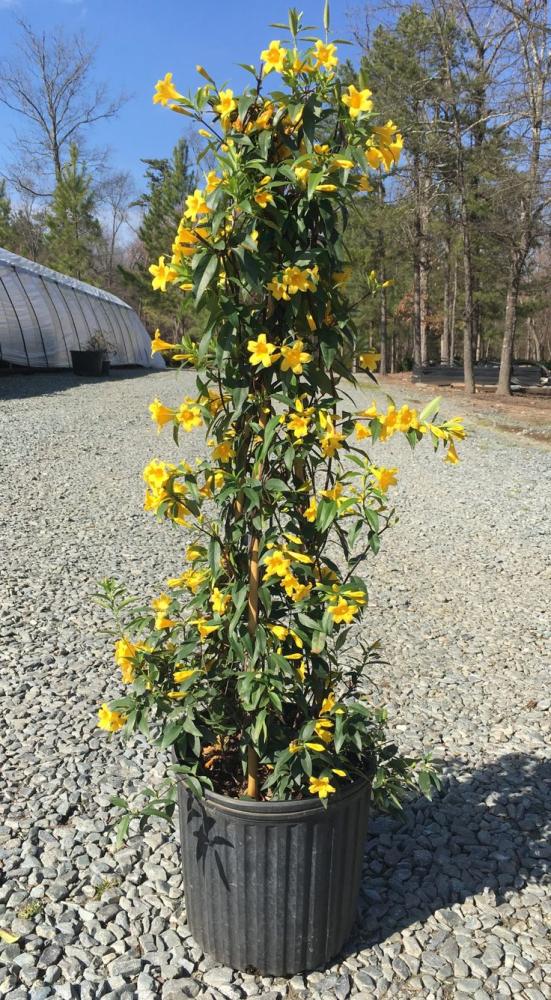
To get a climbing plant: tie a thick string or rope to the plant’s stem, fix the rope in a high area, and train the plant to coil around the rope in a zigzag shape.
How to plant Allamanda from seeds:
*Extract the seeds from the flower when it dries.
*Sprinkle the seeds evenly on the soil surface.
*Lay a thin layer of soil over them.
*Water the soil, maintaining continuous moisture until germination.
Fertilization:
Apply organic fertilizer with the soil before planting, with daily watering 3 to 4 days before planting. After that, fertilize once a year with organic fertilizer in November, December, or January. A small amount of fungicide can also be added with the organic fertilizer.
Read more
Purchased
17 times
Description
Allamanda plant or golden trumpet, considered one of the evergreen climbing plants, belongs to the Apocynaceae family, its original homeland in Brazil. These flowers are distinguished by their fragrant, sweet scent, ease of care, beautiful leaves, and large flowers, which take the shape of a trumpet in bright yellow, with a diameter of 10 to 12 cm, blooming throughout the year, especially from the beginning of July to November. They attract butterflies and hummingbirds, but are not widely spread in Arab countries. It is preferred to cultivate it on house facades as a climbing plant on walls, and it is considered a decorative plant for fences and gardens.
Characteristics of Allamanda or golden trumpet plant
Scientific name: Allamanda
Original homeland: Brazil, the Americas from Mexico to Argentina, but it is spread in many Arab countries.
Nickname: Allamanda, golden trumpet.
Family: Apocynaceae.
Type: Allamanda.
Height: 8 meters.
Suggested use: Generally cultivated for decoration in homes, gardens, roads, and also for soil coverage; it has multiple health benefits.
Leaves: Evergreen.
Propagation: Allamanda is propagated by seeds, terminal cuttings, and intermediate cuttings.
Planting instructions
Soil: All types of soil are suitable for planting Allamanda except salty soil; the plant is sensitive to salinity, which should not exceed 1000 ppm. It is preferable to plant in light, rich, well-drained, and aerated soil.
Watering: Allamanda loves moisture, and watering is done when the top surface of the soil dries out to about 2 cm.
Planting location: It is planted in wide lands, roads, as well as in homes or parks.
Climate conditions:
Drought: Tolerant.
Temperature: Tolerant of high temperatures.
Frost: Avoid frost below 5 degrees Celsius, and the plant should be covered during that period.
Exposure: Loves direct sunlight for at least 6 hours a day.
Plant care:
Pruning should be done at the end of winter to increase the density of the plant, including removing weak, damaged, stray, and old branches. It can be pruned to obtain a single-stem shrub, with continuous pruning.
It is preferable to plant it near a wall, leaving 1 meter between the plants.
To get a climbing plant: tie a thick string or rope to the plant’s stem, fix the rope in a high area, and train the plant to coil around the rope in a zigzag shape.
How to plant Allamanda from seeds:
*Extract the seeds from the flower when it dries.
*Sprinkle the seeds evenly on the soil surface.
*Lay a thin layer of soil over them.
*Water the soil, maintaining continuous moisture until germination.
Fertilization:
Apply organic fertilizer with the soil before planting, with daily watering 3 to 4 days before planting. After that, fertilize once a year with organic fertilizer in November, December, or January. A small amount of fungicide can also be added with the organic fertilizer.
Read more